

Dear New World Investor:
The Fed raised rates last month for the first time in more than three years. In spite of the market expecting another Fed rate increase yesterday, as expressed by the CME FedWatch tool, it was a 10-2 split decision to hold the benchmark interest rate steady in the range of 3.75% to 4%.
Chairman Warsh said: “If you were listening next to me in that room the last couple of days, the overwhelming consensus, the overwhelming judgment, is that what we’ve done in this monetary medicine is starting to work some, but there’s no firm conclusions. I’m encouraged by the progress we’ve made in a short period of time. But if the crux of your question is ‘you haven’t delivered yet, you haven’t achieved price stability,’ you’re right about that. But we’re working on it.”
So now the FedWatch tool thinks there is a 74.9% chance of a quarter-point increase at the December 9 meeting. Mercifully, Warsh is changing the current 8 votes a year to 7 a year in 2027 and we’ll only have to deal with 6 a year in 2028.
The first estimate of September quarter real GDP was +3.4%, just above the Atlanta Fed’s GDPNow model estimate of 3.3% and well above both the Blue Chip consensus for +2.9% and the June quarter’s +2.2%. The AI build-out was the main engine, with business investment surging 12.7%. Consumer spending grew 3.8% again, matching the June quarter rate, which was the strongest since the end of 2024.
The GDPNow model’s first estimate for the December quarter is another robust +3.2%, thanks in part to continued heavy spending for AI data centers. The economy is OK.
The Business Employment Dynamics report for the March 2026 quarter shows gross job gains of 7,381,000 and gross job losses of 7,293,000, for a net gain of 88,000 jobs for the entire quarter. That’s much weaker than the original monthly reports. The labor market is still mediocre.
This morning’s Personal Consumption Expenditures (PCE) Index headline increase for September was +3.6% year-over-year, up from +3.4% in August. It rose +0.5% month-over-month, up from 0.3% in August. The core PCE – the Fed’s favorite inflation indicator – rose 3.1% year-over-year and 0.3% month-over-month, up a tenth from August’s 0.2%. With GDP growth above trend, core inflation still above the 2% target, and headline inflation reaccelerating, yesterday’s Fed hold increasingly looks like a pause rather than the end of this tightening cycle.
Market Outlook
The S&P 500 lost 0.3% over the last two weeks as the boring market continued. The Index is up 12.8% year-to-date. Since the early 1980s, the S&P has had a pullback of more than 5% in every year but two. The average recovery has taken three months from a 5%-10% downturn and eight months from a 10%-20% correction. Right now, the five largest technology companies in the S&P trade at an average forward price-to-earnings (P/E) ratio of about 23x, compared with about 65x for their counterparts shortly before the dot-com bubble burst in 2000. Just looking at that, you’d say we aren’t likely to see a 10% correction, but if we do it will recover and go higher over the following 12 months.
But this year is different – the midterm elections are next week, and in spite of the anxiety headlines for the stock market it makes no difference if the Republicans hold both houses, or the Democrats take both houses, or the Dems take the House while the Repubs keep the Senate. After all 19 midterms between 1950 and 2022, the S&P was higher 12 months later every time. The market loves to move past political uncertainty – the average gain in those 19 years was 15.1%.
The Nasdaq Composite lost 2.0% in what I think will be the last gasp of the AI bears for a few months. It is still up 14.2% for the year and, if I’m right, is headed for a barn-burner 2026. The SPDR S&P Biotech Exchange-Traded Fund (XBI) climbed 5.3% as the stealth biotech bull market continued. It is up 29.4% year-to-date. The small-cap Russell 2000 added 3.3% and is up a respectable 15.2% in 2026.
Top 5 Long-Term – alphabetical order
Changes this issue: None
ABCL AbCelllera – Will become a huge pharma royalty company
UUUU Energy Focus – Domestic uranium supplier
EQT EQT – largest US natural gas company
IBIT iShares Bitcoin Trust – Bitcoin is headed for $150,000
META Meta – a (the?) leader in the metaverse
PLTR Palantir – a (the?) leader in AI applications software
SCYX ScyNexis –First new antifungal in 20 years
Coming Events
All times below are ET, and most presentations and slides are archived on the companies’ websites so you can listen to them.
Friday, October 30
AG – First Majestic – Through 10/31 – New Orleans Investment Conference
Saturday, October 31
Halloween
Sunday, November 1
Standard Time – 2:00am your local time – Turn clocks back one hour
Monday, November 2
ON – Onsemi – 5:00pm – Earnings conference call
PLTR – Palantir – 5:00pm – Earnings conference call
Tuesday, November 3
Election Day
CMPS – Compass Pathways – 8:00am – Earnings conference call
Wednesday, November 4
VET – Vermilion Energy – 9:00am – Earnings conference call
CDE – Coeur Mining – After the close – Earnings release; call tomorrow
FSLY – Fastly – 4:30pm – Earnings conference call
SNAP – Snap – 5:00pm – Earnings conference call
Thursday, November 5
CDE – Coeur Mining – 11:00am – Earnings conference call
AG – First Majestic – 11:00am – Earnings conference call
UUUU – Energy Focus – 11:00am – Earnings conference call
RGLD – Royal Gold – 12:00pm – Earnings conference call
Friday, November 6
October payrolls – 8:30am
Monday, November 9cc
ABCL – AbCellera – 5:00pm – Earnings conference call
Tuesday, November 10
EDIT – Editas – 2:30pm – Guggenheim Healthcare Innovation Conference
QUIK – QuickLogic – 5:30pm – Earnings conference call
Wednesday, November 11\
Veterans Day
ABCL – AbCellera – 8:00am – Stifel Healthcare Conference
CMPS – Compass Pathways – 8:40am – Stifel Healthcare Conference
Friday, November 13
AG – First Majestic – Through 1/14 – Deutsche Goldmesse Conference
MDNAF – Medicenna – 10:36am – Society for Neuro-Oncology annual meeting
Big Tech: The Biotech & Digital Dominators MegaShift
There are at least four ways to make money in the stocks of these large, growing, dominant companies. You can:
* * Buy a stock and hold it
* * Buy a stock and write a call option against it
* * With a Level IV options account, write an out-of-the-money put option
* * With a Level IV options account, write an out-of-the-money put option and use part of the premium to buy an out-of-the-money call option
AI stocks & Data Center Growth
Anthropic (ANT) has filed to go public before OpenAI, which postponed their IPO to 2027 and is doing another private round now, raising $30 billion at a $1.25 trillion valuation. The Anthropic prospectus has severely damaged or maybe killed the bear case on AI. It shows a much more diversified revenue base than people expected. Their top five customers were only 21% of sales in the June quarter, down from 36% in the March period. And revenues are growing rapidly, from $1.2 billion in the first half of 2025 to $16.3 billion in the first half of 2026. They are now at a $75 billion annual run rate.
Growth has been anchored by large-scale enterprise contracts. Thousands of corporate customers now spend $100,000 to over $1 million annually on Anthropic’s AI infrastructure and services. The company’s compute and infrastructure spending hit $8.9 billion in the first half of 2026 – more than the entire 2025 year. How can they afford that? Well, in part because they had $131.7 billion in cash at the end of June.
Market research firm SemiAnalysis says annual additions to data center IT capacity (excluding China) will more than double next year, from 25.0 gigawatts in 2026 to about 51.2 gigawatts in 2027.
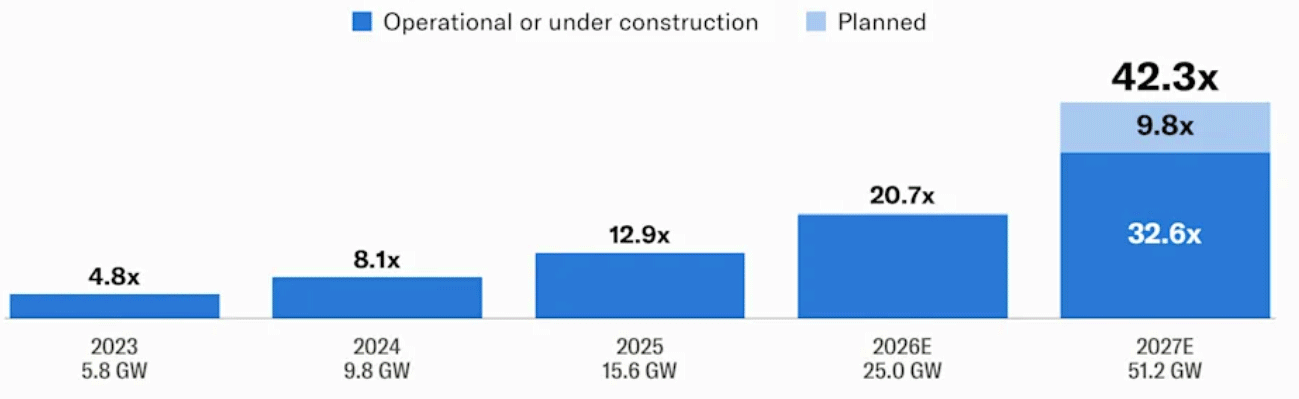 Click for larger graphic h/t Yahoo Finance
About three-quarters of 2027’s expected additions are already under construction or operational. SemiAnalysis is expecting 40 projects with more than 24 gigawatts in advanced construction to be completed in 2027.
How do you build that much, that quickly? In pieces. Suppliers now build electrical rooms and cooling systems in factories while crews prepare the site. SemiAnalysis calls the results “Lego data centers,” but the Lego bricks weigh up to 50,000 pounds. A SemiAnalysis model of a 50-megawatt AI data hall puts conventional construction at 22 months and a fully modular approach at 14, excluding permitting. The biggest saving comes from electrical and mechanical installation. For the owner of the chips inside, SemiAnalysis values that eight-month head start at about $200 million.
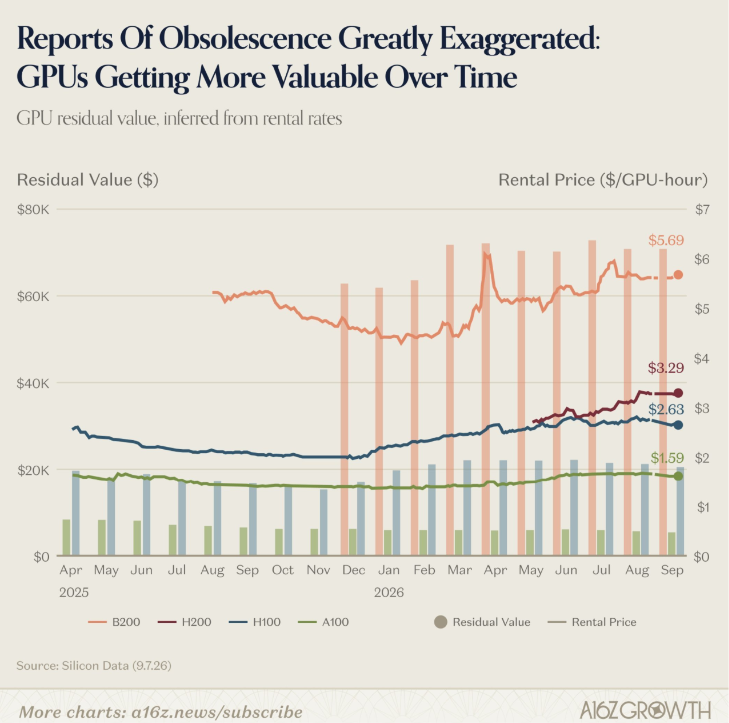
One of the fraudulent arguments of the AI bears is that GPU technology advances so quickly that the data centers are obsoleted much faster than the depreciation schedule. If you hear that one, it’s a sure sign there’s a liar talking.
 Click for larger graphic
Broadcom (AVGO – $345.00) has a $63 billion custom semiconductor deal with Anthropic. The bears have been saying the deal might be canceled because Anthropic can’t afford it, but Anthropic’s IPO filing blew them out of the water. BofA, Blackstone, Citi, and Morgan Stanley announced a $63 billion transaction through a newly formed special purpose vehicle to support the purchase of Broadcom XPU AI accelerators and networking solutions to be leased to Anthropic. CEO Hock Tan said: “Today’s transaction underscores the power of our advanced technology and our strong conviction in the AI ecosystem. Fundamentally, the need for AI compute continues to grow at an extraordinary pace. This validates that there is capital available to finance such growth and that Broadcom is uniquely positioned to enable it.”
At ~20x earnings after a 33% price decline, driven by market overreaction to capital bottleneck concerns, AVGO trades at an average S&P 500 multiple despite superior prospects. The company delivered terrific June quarter results: 86% revenue growth, 221% AI semiconductor growth, and strong guidance for fiscal 2027 and 2028, with earnings per share targets up to $30. At 17x fiscal 2027 and 11x fiscal 2028 earnings, AVGO is a Buy for a return to its $495 high and beyond.
Gilead Sciences (GILD – $165.61) reported September quarter results today. Revenues rose 6.8% from last year to $8.3 billion, beating the $7.8 billion expectation. Pro forma earnings per share of $2.55 were far above the $2.19 estimate. For the full year, they now expect $31.0-$31.3 billion in revenues (previously $30.1-$30.4 billion) but an 85¢-$1.20 pro forma loss per share (previously 30¢-65¢ loss per share). The consensus was expecting a 45¢ loss, but the stock is up in the aftermarket.
Emvistegrast, their oral bowel disease therapy, succeeded in a Phase 2 trial for adults with moderate to severe ulcerative colitis. It reached the primary endpoint, as 66% of patients on a 200mg dose achieved a clinical response compared with 37% on placebo. Additionally, 31% of patients in the on-drug arm recorded clinical remission over the period compared with 8% in the off-drug arm. They will start a Phase 3 trial for the α4β7 integrin inhibitor in 2027.
The company also acquired an oral IL-23R inhibitor program from PepStarTherapeutics, including their lead candidate HCXT-2001 now in a Phase 1 trial, for $1.275 billion. Because IL-23R is a clinically validated target in immune-mediated inflammatory diseases, it could eventually see use for treating inflammatory bowel disease and psoriasis. Gilead Chief Medical Officer Dietmar Berger said that HCXT-2001 could be used alone or in combination with emvistegrast for IBD. The deal will reduce Gilead’s GAAP and non-GAAP EPS by ~79¢ to 83¢ in the December quarter. GILD is a Long-Term Buy for a first target of $150 as new drugs succeed and Wall Street revalues it as an oncology company.
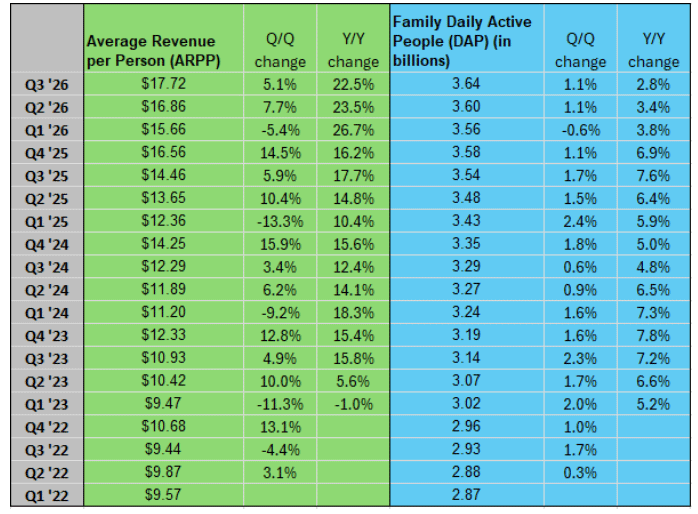
Meta Platforms (META – $624.52) reported September quarter revenues up 26.1% from last year to $64.6 billion, ahead of the consensus estimate for $63.41 billion. Pro forma earnings of $7.40 a share also beat the $6.80 consensus. Family daily active people (DAP) was 3.64 billion on average for September, up 3% year-over-year. Ad impressions increased by 10% year-over-year, and the average price per ad increased by 14% year-over-year.
 Click for larger graphic h/t Seeking Alpha
On the conference call (WEBCAST HERE and SLIDES HERE and PREPARED REMARKS TRANSCRIPT HERE and ANALYST Q&A TRANSCRIPT HERE), CEO Mark Zuckerberg guided the December quarter revenues to $73-$76 billion, above the $73.75 billion consensus. He raised the lower end of their 2026 capital expenditure range from $130-$145 billion to $135-$145 billion.
Zuck said: “We hit major milestones this quarter toward delivering personal superintelligence for everyone—including launching Muse and Muse Wonder, our first frontier model. Our investments are paying off, the core business is strong, and we’re seeing velocity across the board.
“We had one of our most successful launches ever with the Muse personal agent. In just 1.5 months, more than 10 million people in the U.S. and Canada have set up Muse personal agents. About 25% of people who have set up Muse use it on any given day.
“It was more than a year ago that I wrote the letter of personal superintelligence as the North Star for the work that we’re doing here. The most important thing that we can build for this next generation of technology is basically putting this technology in everyone’s hands, which is the personal superintelligence vision.
“These are long-term bets. I feel like this is what we’re here to do: make long-term technology bets and design the best experiences end to end that we can for billions of people around the world. And I think as long as we continue to do that, then over time the business takes care of itself.”
As usual, the stock dropped more than 5% the next day as Wall Street shook out some weak hands and hoovered up their stock. Meta introduced a new class of non-voting stock, with all current shareholders receiving one share for every share they own. That’s a back-door 2 for 1 split scheduled for January 19. Then the company will raise up to $95 billion for AI spending, including a first tranche of $37.5 billion that’s already done. The rest will be in an At-The-Market facility, not an underwritten offering.
Wall Street’s concerns follow Meta’s disclosure that future spending commitments on leases and contracts, many tied to AI computing and infrastructure, have climbed to about $825 billion, up from nearly $700 billion reported in July. Free cash flow turned negative at $2.12 billion in the third quarter, compared with a positive $784 million in the June quarter and $10.63 billion a year earlier. While free cash flow is under pressure now, I expect AI-driven growth to enable meaningful dividend increases in three to five years. At 18.6x 2027 earnings after a 20% pullback, META is a Buy for a long-term hold as the AI revolution plays out.
Nvidia (NVDA – $213.66) made a number of introductions at the Berlin GTC:
The company introduced DSX POD, a reference design for AI data centers built in modular containers and assembled and tested before delivery. Nvidia said the approach could cut deployment time at prepared sites from six months to as little as 14 days. So far, Nvidia is working with 17 partners to deploy DSX PODs by the first quarter of 2027.
Jensen said they are working with supply chain partners to expand capacity – big surprise. But it sounded like he is making more progress, including a $1.3 billion deal with Amkor to increase advanced packaging capacity by more than 300% by the end of 2028. He also said Infineon is advancing its collaboration with Nvidia on gallium nitride-based intermediate bus converter solutions for 800 volt DC AI data center power architectures. He called out substrate agreements with IBIDEN, Samsung Electro-Mechanics, and Unimicron Technology Corporation for a 2.5x increase over three years. King Yuan Electronics plans new facilities in the United States backed by a $1.1 billion capacity reservation advance from Nvidia.
The importance of all this: on the November 17 earnings call, he might raise the 70% revenue increase in 2027 that they already guided for.
BNP Paribas, which has an Outperform rating and a $345 target price on Nvidia, wrote: “We walked away from GTC Berlin with a few salient takeaways: 1) Nvidia continues to optimize at the AI factory level to expedite GW-scale deployments; 2) Nvidia’s CPO push for scale-out and scale-up networks remains on track for 2H of CY26 and 2H of CY27, respectively; and 3) Nvidia is investing heavily in the AI supply chain as data center deployments proliferate across Europe and Asia. We remain bullish on Nvidia as the undisputed AI infrastructure leader with expansion into turnkey AI factory solutions, secure autonomous agents, and sovereign AI buildouts.”
At 14x calendar 2027 estimates, NVDA is a Buy for a $275 first target as the AI revolution plays out.
Palantir (PLTR – $196.42) is expected to deliver another quarter of stronger-than-expected revenue growth from its U.S. government and commercial segments on Monday, despite facing significantly tougher comparisons, according to Citi Research. They wrote: “Our intra-Q checks with partners were strong, especially for US federal FYE with a specialized federal partner citing 60%+ YoY growth across the broader technology practice with PLTR a top beneficiary, reflecting a sharp rebound from the DOGE-related headwinds seen last year.
“We expect a similar F2Q upside with commercial revenue, driven by 140%+ US Commercial growth despite 30pts harder compares, and another reacceleration in Intl Com. USG should also beat by a percentage similar to last 1Qs. While our Federal Contracts Tracker showed a decline, it would point to healthy growth if we normalize for typical lag of DOD contracts in the $300-400M+ quarterly run-rate in the last 6Qs. We expect another strong guidance raise for FY26 revenue growth of ~10 pts driven by US.”
They maintained their Buy rating and inched up their target price from $245 to $250. The consensus estimate expects revenue of $2.18 billion, up 84.7% from $1.18 billion last year, with pro forma earnings per share nearly doubling to 41¢ from 21¢.
Despite management’s conservative guidance, historical beats suggest 2026 revenue could approach $8.6 billion, with 2027 targets exceeding $13 billion. We could be looking at a $500 stock by 2031. PLTR is a Buy for a $200 first target as the AI revolution plays out.
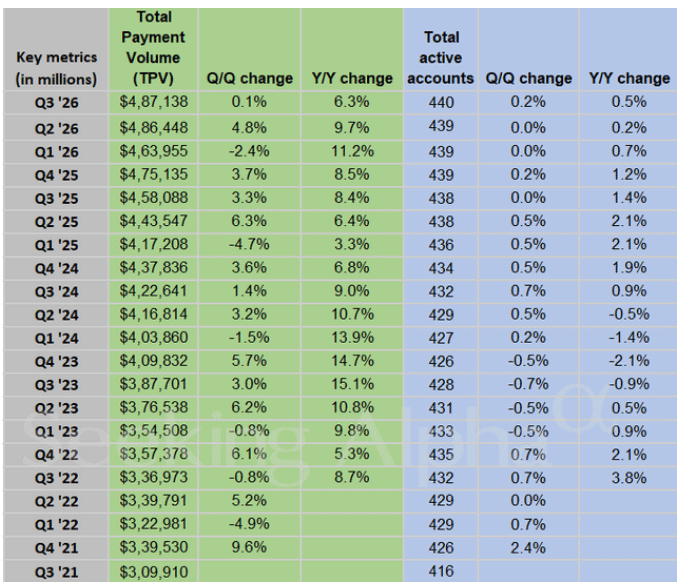
PayPal Holdings (PYPL – $56.95) reported a good quarter. Revenues rose 2.4% from last year to $8.6 billion, a skootch under the $8.71 billion estimate. Pro forma earnings of $1.45 a share easily beat the $1.31 consensus. Total payment volume increased 6% to $487.1 billion, while payment transactions increased 7% to 6.8 billion.
 Click for larger graphic h/t Seeking Alpha
On the conference call (WEBCAST HERE and SLIDES HERE and TRANSCRIPT HERE), CEO Enrique Lores guided December quarter earnings to $1.43, above the $1.35 consensus, putting the full year at $5.60 versus the $5.39 consensus. He now expects transaction margin dollars to increase to approximately $15.7 billion, and said: “This quarter, we are beginning to see our strategy translate into financial results, with transaction margin dollars growing approximately 2% and non-GAAP earnings per share growing 8%, with $2 billion of adjusted free cash flow, and we returned over $1.6 billion through buybacks and dividends.”
Enrique emphasized a strategic pivot “expanding beyond checkout into financial services,” calling it “a larger driver of our growth,” and said financial services “already represent more than 20% of transaction margin dollars in 2026 and are growing double digits,” citing broader BNPL distribution including “Amazon in Germany and Austria.”
He spotlighted structural cost and organizational changes, saying: “We have reduced headcount by more than 2,000 and removed three organizational layers, and the company is on track to achieve our target of at least $1.5 billion in gross run rate cost savings over 2 to 3 years, including more than $700 million exiting the fourth quarter.”
CFO Jamie Miller said: “Our guidance now includes at least $6.5 billion of adjusted free cash flow and continues to incorporate approximately $6 billion in share repurchases.”
Venmo’s total payment volume rose 14% year-over-year and now represents 20% of PayPal’s total payment volume. The company is showing a sustained recovery, with the stock up nearly 14% in six months and a clear trend reversal to the upside underway. Yet it still trades at a compelling 10.3x forward earnings, well below its fintech peers, reflecting deep market skepticism despite consistent >$6 billion free cash flow generation. You don’t often get a 24% free cash flow yield trading at 9.7x earnings. PYPL is a Buy for a triple in three years as the turnaround plays out.
SoftBank (SFTBY – $14.98) 5-year credit default swaps have climbed to 432 basis points, their highest level in four years, as worries mount over AI-related funding and a possible large acquisition of Allied Universal. The spread has widened by more than 30 basis points since it first moved above 400 a week earlier. For now, Hold SFTBY for a $30 target as the discount to hard book value shrinks.
Small Tech
Enovix (ENVX – $3.51) declared a special dividend of one warrant to buy stock at $3.00 for every four shares held on November 13. The last time they did this you could sell the warrant or exercise it either to increase your position or cover a short sale to lock in a profit. When they did this in 2025, they brought in $232.1 million.
Executive Chairman T.J. Rodgers said: “As I wrote to shareholders last year, the first point about a warrant dividend is counterintuitive: it is non-dilutive, because it is neutral to percent ownership. Every shareholder gets the same one-for-four deal. The no-cost warrants trade on Nasdaq, so every holder has a simple choice to make – sell, hold, or exercise them. This offering adds one new feature to the 2026 warrant dividend. A holder of our 2028 Notes can pay the exercise price with those notes at face value, so every warrant exercised with 2028 Notes retires debt dollar-for-dollar without Enovix spending a dollar of cash. Our 2025 one-sentence summary still holds: a warrant dividend rewards shareholders directly for supporting us.”
All of our ENVX is in my wife’s Roth IRA, so if the expiration date is after January 1, I probably will exercise them. ENVX is a Buy for a 4-year hold to $100+ as their BrakeFlow lithium-ion battery takes market share.
Primary Risk: A new competitor invents a better battery.
First Trust NASDAQ Cybersecurity Exchange-Traded Fund (CIBR – $105.00) is benefiting from the AI technology advancements. Cybersecurity solutions and services become a key investment vertical that corporations cannot afford to cut. It’s a lower-risk way to invest in the AI revolution. CIBR is a Buy for a 3- to 5-year hold as the need for cybersecurity gets stronger and stronger at every level of society.
Primary Risk: A technology emerges to stop hackers.
Fastly (FSLY – $25.64) has a Buy rating with a $35 target price from Oppenheimer, and a compelling growth story in edge computing and AI-driven cybersecurity. Its 23% year-over-year revenue growth and 12.66% free cash flow margin make FSLY a Buy for a 3- to 5-year hold to $50+ as the AI revolution plays out.
Primary Risk:Content and applications delivery networks are a competitive area.
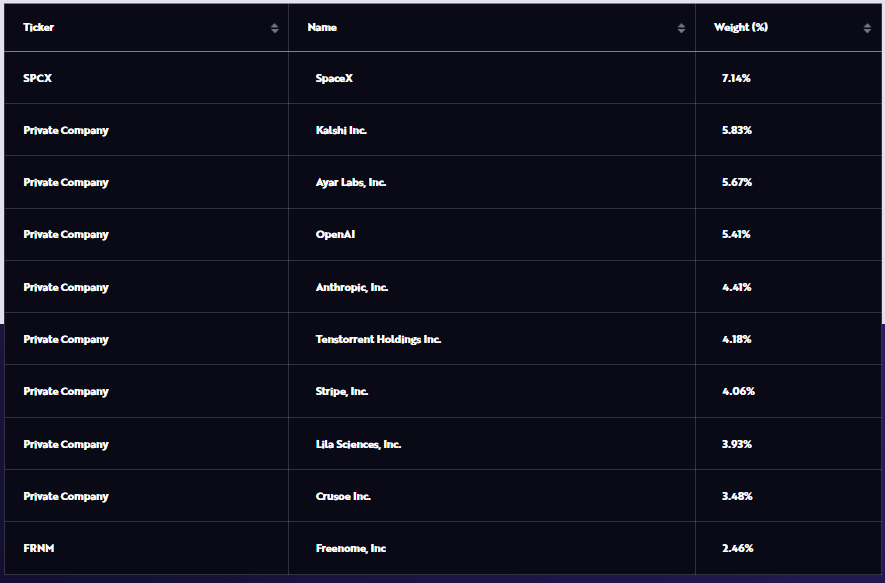
ARK Venture Fund (ARKVX – $60.56) has a reasonable holding in Anthropic.
 Click for larger graphic
ARKVX is a Buy for the Anthropic IPO.
Primary Risk: Cathie sells the stock before the IPOs.
Biotech MegaShift
If you can afford it – and it would not be too big a position in your portfolio – putting $2,000 into each of these speculative biotechs might be a good way to start. Buying these out-of-favor, fallen, or forgotten companies at very low market capitalizations that can get important products through the FDA seems like a good strategy to me.
Risks
Development-stage biotechs are subject to investor sentiment swings from wildly optimistic to excessively pessimistic – mostly the latter recently. After the Primary Risk for each company, I’ve added the clinical stage of their lead product, the probable time of their first FDA approval, and the probable time of their next financing.
As always, you need to think about an appropriate position size. You could buy a full position upfront and then just hold on, or buy some upfront and leave room to add more on the inevitable financings, transient clinical trial setbacks, and the like
Akebia Therapeutics (AKBA- $0.74) said that U.S. Renal Care presented data from the Vafseo Outcomes In Center Experience (VOICE) trial during a late-breaking session at the American Society of Nephrology Kidney Week 2026. The presentation highlighted findings of significantly improved safety outcomes in patients treated with vadadustat dosed three times weekly versus an erythropoiesis-stimulating agent (ESA). Additional data showed more stable hemoglobin control and fewer serious adverse events in the patients treated with vadadustat. Buy AKBA for the Vafseo launches in the EU, UK, and US. I think Vafseo will become the standard of care in dialysis patients. I expect GSK and/or Amgen to make a bid for the company.
Primary Risk: Vafseo doesn’t sell in the US.
Clinical stage of lead product: Approved
Probable time of next approval: 2030
Probable time of next financing: Never
Inovio (INO – $0.77) has a PDUFA date tomorrow for INO-3107, and approval is all but certain. We’ll see how it moves the stock.
The company won an $80.4 million judgment in a lawsuit that accused VGXI and GeneOne Life Sciences of violating a supply agreement. They successfully argued that the two companies declined to abide by technology transfer obligations that would have allowed scalable manufacturing of DNA plasmids.
Good news? Not so fast. Both VGXI and GeneOne are in financial distress, and I doubt Inovio will ever see a penny. Even so, INO remains a Buy for a very long-term hold.
Primary Risk: Their drugs fail in the clinic.
Clinical stage of lead product: Phase 3
Probable time of first FDA approval: Mid-2026
Probable time of next financing:After FDA approval in 2026
ScyNexis (SCYX – $3.86) completed their Phase 1 trial of intravenous SCY-247, their second-generation novel triterpenoid antifungal in development for the treatment and prevention of invasive fungal diseases. It was generally well tolerated in healthy participants, with no drug-related serious adverse events. A once-daily intravenous dose of 50 mg or higher achieved exposures at or above the target identified in murine models of invasive candidiasis. ScyNexis expects to start a Phase 2 trial of SCY-247 in both oral and IV formulations in 2027. I am moving SCYX back to a Buy because we seem to be through the after-effects of the reverse split.
Primary Risk: Ibrexafungerp fails to sell.
Clinical stage of lead product: Approved
Probable time of next FDA approval: 2028
Probable time of next financing: Never
TG Therapeutics (TGTX – $58.08) announced initial results from their Phase 1 trial evaluating azer-cel in patients with progressive multiple sclerosis (MS). The data represent the first reported clinical evaluation of an allogeneic CD19-directed CAR T-cell therapy in progressive MS and were presented in a late-breaking oral session at MSToronto2026.
CEO Mike Weiss said: “These initial azer-cel results are particularly encouraging given that all patients entered the study with progressive disability despite prior treatment with high-efficacy therapies, including anti-CD20 treatment. The safety findings to date, together with evidence of B-cell depletion in both the blood and cerebrospinal fluid, demonstrate biological activity at doses that appear tolerable, while stable or improved disability scores in most subjects provide a potential signal of clinical activity.
“Of particular interest, five of the 18 evaluable patients experienced improvements in disability scores, including three patients with improvements of two or more points on the EDSS scale, an encouraging early finding in a disease where even slowing progression can represent an important therapeutic advance.
“While these results remain preliminary, we believe an off-the-shelf CAR T-cell therapy has the potential to offer a meaningful new treatment option for patients with progressive MS, where substantial unmet need remains.”
Buy TGTX for a target price in a buyout of $60 or more.
Primary Risk: Briumvi, the MS drug, fails to sell.
Clinical stage of lead product: Approved
Probable time of next FDA approval: NM
Probable time of next financing: Never
Inflation MegaShift
Gold ($4,038.70) gets a lot of press about how disappointing it’s been this year (bitcoin too), but I see a pretty solid floor at $4,000.The next leg up from there might not happen until the S&P is hit by a geopolitical storm, but that is one thing gold is supposed to do. The other is protect you against 2% or higher inflation as the Uniparty merrily spends money they don’t have.
Maybe Warren Buffett was right that he could fix the national deficit in five minutes using a single, blunt rule to completely realign the incentives of politicians: “You just pass a law that says that anytime there is a deficit of more than 3% of GDP, all sitting members of Congress are ineligible for re-election.”
Miners & Related
Coeur Mining‘s (CDE – $14.04) reported silver cost at Palmarejo is $27.69/oz. After you credit the gold from the same rock, and it falls to about $6. But the gold side has its own distortion: $834 of the $2,442 gold cost per ounce was a non-cash charge from the New Gold deal. So the mines are better than the cost lines suggest. CDE is a Hold as gold goes higher.
Primary Risk: Prices of precious metals fall due to US dollar strength.
Dakota Gold (DC – $5.47) presened at the LD Micro Main Event (WEBCAST WITH SLIDES HERE and SLIDES HERE). DC is a Hold as gold goes higher.
Primary Risk: Robert Quartermain doesn’t find enough gold. Secondary risk: Prices of precious metals fall due to US dollar strength.
Royal Gold (RGLD – $236.83) announced preliminary September quarter results. Stream segment sales were $318.3 million and royalty segment sales were $142-$149 million. During the quarter, they repaid $250 million of debt, resulting in an outstanding balance on the revolving credit facility of $150 million on September 30, leaving $1.25 billion undrawn and available. Management is targeting zero debt by the end of the year if metal prices hold They also bought back 190,045 shares at an average price of $259.83 per share, for total consideration of $49 million. We’ll get final numbers next week.
The stock still trades at a steep discount to peers despite robust growth, record cash flow, and a near debt-free balance sheet. Their forward growth outlook is strong, with 2026 guidance ~30% above 2025 and a five-year midpoint 17% above 2026, while valuation remains compelling at 14x cash flow. RGLD is a Buy until the valuation discount disappears or precious metals top out.
Primary Risk: Prices of precious metals fall due to US dollar strength.
Cryptocurrencies
Cryptocurrencies are a diversifying asset that offer a unique opportunity to make (or lose!) a lot of money quickly.
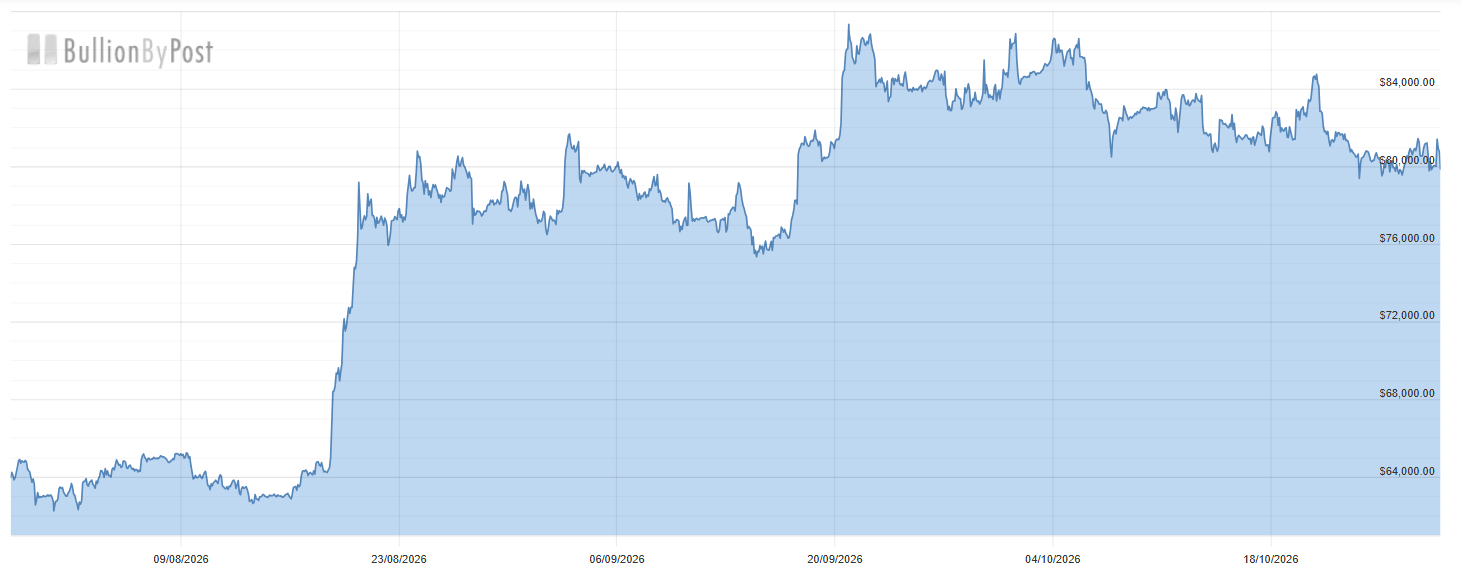
Bitcoin (BTC-USD on Yahoo – $79,842.53) is #1. JPMorgan Asset Management just released its 2027 Long-Term Capital Market Assumptions, the 31st edition of a report institutional allocators build their models around. It contains thirteen asset classes, ranked by expected compound return over the next decade. Bitcoin is at the top of it.
JPMorgan projects a whopping 10% annually for bitcoin over 10 to 15 years. REITs come second at 8.2%, small caps 7.7%, U.S. large caps 7.5%. gold lands at 5.5%. Over a decade of compounding, $100 in bitcoin becomes $259 against $206 in large caps and $171 in gold.
This is the first time bitcoin has appeared in the report at all, and that matters more than the number. Pension consultants and RIAs run their allocation models off assumptions like these, and for the past thirty editions bitcoin’s expected return was undefined. Now it has a figure, from JPMorgan, at the top of the table.
Click for larger graphiccc
BTC-USD, ETH-USD, IBIT, and ETHA are Strong Buys.
Primary Risk: Bitcoin falls due to over-regulation or is surpassed by another cryptocurrency.
iShares Bitcoin Trust (IBIT- $45.71) remains the cheapest and easiest way to buy bitcoin. IBIT is a Buy for the 2028, 2032, and 2036 halvings.
Primary Risk:Bitcoin falls due to over-regulation or is surpassed by another cryptocurrency.
Ethereum (ETH-USD on Yahoo – $2,211.60) was chosen by JPMorgan for its JPM Coin deposit token for institutional clients, according to Bloomberg. The move to the public blockchain network builds on JPM Coin’s rollout on Base, a private, permissioned Ethereum layer-2 network, last year. The deposit token represents dollar deposits at JPMorgan, allowing eligible institutional customers to transfer money on blockchain infrastructure around the clock.
According to Bloomberg, the Ethereum expansion announcement targets large crypto businesses that make payments and financial institutions seeking digital cash to settle transactions. It expands the bank’s public blockchain presence, although eligibility restrictions mean the token is not available to all Ethereum users.
Naturally, this was like throwing raw meat to the wolves. Fundstrat co-founder Tom Lee said ETH is headed for $10,000, Standard Chartered said $10,000 by the end of 2027 and $40,000 by 2030, and some guy named Borovik said $60,000. He pointed to Ethereum’s role in stablecoin payments as a reason Ethereum could rise roughly 25-fold. He cited more than $20 trillion in ETH stablecoin transfers over the 12 months through June 2026, attributing the figure to Fidelity, and put the network’s share of global stablecoin supply at approximately 48%. He then applied that percentage to Citi’s projection of roughly $100 trillion in annual stablecoin transaction activity by 2030, and wrote: “If ETH captures 48% of flows: ~$48T/year. I am so bullish!!”
But ETH’s transaction fees depend on computational work and demand for network capacity, rather than a fixed percentage of the dollars being moved. Fees are paid in ETH, and the base-fee component is burned, but a larger payment does not automatically generate a proportionately larger fee. Supporters nevertheless argue that fees capture only part of Ethereum’s potential value. There’s no doubt that more adoption strengthens the case for price appreciation. How much is the question.
ETH sits 50% below its $4,946 all-time high and ETH-USD is a Buy for crypto startups using the ethereum blockchain.
Primary Risk: Bitcoin extensions outperform Ethereum.
iShares Ethereum Trust (ETHA- $52.78) remains the cheapest and easiest way to buy ethereum. ETHA is a Buy for the coming explosion in token-funded start-ups.
Primary Risk: Ethereum falls due to over-regulation or is surpassed by another cryptocurrency.
Commodities
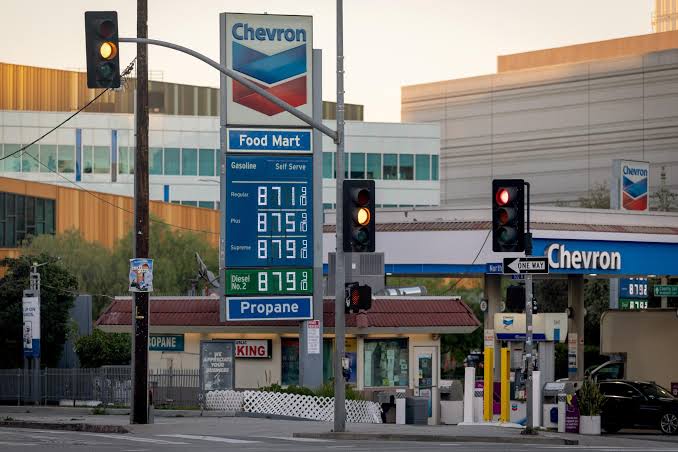
Oil – $102.84
Oil around $100 a barrel seems to be the new normal. Crude inventories are still falling for the fourth week in a row, down 1.9 million barrels. Reality is here.
Click for larger graphic
The September 2027 Crude Oil Futures (CLU7.NYM – $85.16) are a Buy for my $200+ target. Only buy futures for all cash; do not use margin.
The United States 12 Month Oil Fund, LP (USL – $64.21) is a Buy for a $150+ target.
Vermilion Energy (VET – $13.61) is a Buy for a target price of $24 or more.
Primary Risk: Oil and natural gas prices fall.
Energy Fuels (UUUU – $8.23) said that Export Finance Australia and the National Reconstruction Fund Corporation, two major Australian Government financing institutions, have together conditionally approved a commitment for up to A$180 million (US$126 million), as part of a proposed A$200 million senior project finance debt facility, to support construction of Phase 1 of the Donald Rare Earth and Mineral Sands Project in Australia. These conditional commitments are in addition to the conditional $725 million loan commitment Energy Fuels received in June from the U.S. Office of Strategic Capital for expansion of the Company’s REE processing, separation, metal and alloy capacity in the U.S.
The Donald project is expected to have a 40-year mine life, with Phase 1 expected to produce an average of 9,000 metric tons a year of rare earth element concentrate and 225,000 tons a year of heavy mineral concentrate.
CEO Ross Bhappu said: “This financing milestone brings the Donald Project closer to a final investment decision and strengthens the upstream foundation of our leading rare earth mine-to-magnet platform. Donald is expected to provide a large-scale, long-term source of monazite and xenotime sand feedstock, further distinguishing Energy Fuels as we develop a vertically integrated, Western-aligned supply chain for rare earth permanent magnets.”
A final investment decision is now targeted by the end of 2026. With the stock down over 40% this year, revenues tripling in the first half versus 2025, and a robust uranium and rare earth growth profile going forward, UUUU is a buy for a $30 target.
Primary Risk: Uranium prices fall.
EQT (EQT – $54.54) reported September quarter revenue down 9.7% from last year to $1.77 billion, just under the $1.86 billion estimate. But pro forma earnings of 42¢ a share handily beat the 36¢ expectations. Operating expenses were at the low end of their guidance (thus, the earnings beat) and capital spending was 10% below the low end of guidance.
EQT is acquiring Range Resources in a $12.83 billion all-stock deal, creating the largest U.S. natural gas producer with more than 9 Bcfe/day (88% natural gas) of output and control of nearly 3 million net acres in the Appalachian Basin. EQT will issue 0.987 shares for each Range share, and the combined company would have a pro forma enterprise value exceeding $50 billion, with EQT shareholders owning approximately 73% and Range investors holding the remaining 27%. The transaction is structured to maintain EQT’s investment grade rating and keep overall debt low. It will close in the March quarter.
On a conference call (WEBCAST HERE and SLIDES HERE and TRANSCRIPT HERE), CEO Toby Rice said: “With a significant inflection in natural gas demand on the horizon, driven by new power generation facilities and expanding pipeline infrastructure, we believe this combination supercharges EQT’s positioning making us the operator of choice for this next wave of demand and unlocking opportunities to create differentiated shareholder value from our combined world-class resource base that neither company could achieve independently.
“The combination of EQT and Range brings together two of the highest quality, longest-duration natural gas assets in North America, with more than 30 years of inventory served by EQT’s integrated infrastructure, EQT’s leading commodities marketing platform and a fortress investment-grade balance sheet.
“We forecast a pro forma unlevered free cash flow breakeven below $2 per million Btu, making EQT the lowest cost and highest quality natural gas producer in the country by a wide margin.”
Bloomberg reported that EQT is leasing two huge liquefied natural gas tankers designed to hold 174,000 cubic meters of LNG and plans to start trading cargoes of the fuel by next year as it aims to become a global supplier able to deliver gas overseas and open access to a higher-priced global market upended by the war in Iran. The company expects to lease up to 10 more ships, depending on customer sales in Europe or Asia.
EQT trades at 6.1x trailing earnings before interest, taxes, depreciation & amortization (EBITDA) and 10.0x trailing unlevered pretax free cash flow. Net debt fell to $5.47 billion, and EQT is a Buy for a long-term hold for much higher natural gas prices.
Primary Risk:Natural gas prices fall.
Freeport McMoRan (FCX – $66.14) reported a double beat for the September quarter. Revenues rose 8.3% from last year to $7.55 billion, just above the $7.545 billion estimate. Pro forma earnings per share of 88¢ cleanly beat the 83¢ estimate.
Consolidated production totaled 832 million pounds of copper, 234 thousand ounces of gold and 22 million pounds of molybdenum.
Consolidated sales totaled 749 million pounds of copper, 105 thousand ounces of gold and 22 million pounds of molybdenum.
On the conference call (WEBCAST HERE and SLIDES HERE and TRANSCRIPT HERE), CEO Kathleen Quirk said consolidated sales are expected to approximate 875 million pounds of copper, 300,000 ounces of gold and 22 million pounds of molybdenum in the December fourth quarter, bringing them in at 3.0 billion pounds of copper, 649,000 ounces of gold and 93 million pounds of molybdenum for the year.
Kathleen said: “Copper sales have increased in each of the last 3 quarters, and we expect fourth quarter sales to be the strongest of the year by far. Steady progress continues at Grasberg with 67% ramp-up achieved and confidence is building towards full scale. We’re positioned to grow from 3 billion pounds this year to 3.7 billion pounds in 2027 and over 4 billion pounds in 2028. Continued strong execution of the Grasberg recovery is the major driver with improved U.S. production adding incrementally. This growth notably does not require new capital.”
On the U.S. leach technology program, Kathleen said, “Data from our work to date is supportive of a potential breakthrough. Lab testing of the new Freeport additive is showing incremental recoveries of more than 4x those achieved with our initial additive. We’ve got 300 million pounds targeted in 2027 compared to just over 200 million in 2026.”
On portfolio and operating rights in Indonesia, Chairman of the Board and former President Richard Adkerson said: “Leaders in Indonesia have expressed support for the extension of our operating rights beyond 2041. We continue to work with the Ministry of Energy and Mines on documentation to implement the Memorandum of Understanding.”
FCX is a Hold for higher copper and molybdenum prices .
Primary Risk: Copper prices fall.
* * * * *
Your reading the Latest Longevity Science YOU can Use Editor,

Michael Murphy CFA
Founding Editor
New World Investor
All Recommendations
Priced 10/29/26. Check out the complete Portfolio page HERE.
Buys
These are the stocks everyone needs to own because transformative events are happening over the next year or two, and I expect to hold them long-term.
Tech Dominators
Broadcom (AVGO – $345.00) – Buy for a long-term hold
Gilead Sciences (GILD – $165.61) – Buy, first target price $150
Meta (META – $624.52) – Buy for a long-term hold
Nvidia (NVDA – $213.66) – Buy, first target price $275
Onsemi (ON – $75.24) – Buy, first target price $130
Palantir (PLTR – $196.42) – Buy, first target price $200
PayPal (PYPL – $56.95) – Buy, target a triple in 3 years
Snap (SNAP – $5.68) – Buy, target price $17+
Small Tech
Enovix (ENVX – $3.51) – Buy, 4-year hold to $100+
First Trust NASDAQ Cybersecurity ETF (CIBR – $105.00) – Buy, 3- to 5-year hold
Fastly (FSLY – $25.64) – Buy for a 3- to 5-year hold to $50+
PagerDuty (PD – $17.38) – Buy, 2- to 5-year hold
QuickLogic (QUIK – $9.24) – Buy under $10, target price $40
ARK Venture Fund (ARKVX – $60.56) – Buy for Anthropic IPO
$20-for-$1 Biotech
AbCellera Biologics (ABCL – $13.08) – Buy, long-term hold to $30+
Akebia Therapeutics (AKBA – $0.74) – Buy, target $10
Compass Pathways (CMPS – $12.19) – Buy, hold a long time for $200
Editas Medicines (EDIT – $2.93) – Buy for a double in 12 months and a long-term hold to much higher prices
Inovio (INO – $0.77) – Buy for a very long-term hold
ScyNexis (SCYX – $3.86) – Buy, after-effects of the reverse split are over
TG Therapeutics (TGTX – $58.08) – Buy, target in buyout $60+
Inflation
A Short-Sale or REO House – ($415,400) – Hold
Bag of Junk Silver – ($52.35) – hold through silver bull market
Sprott Gold Miners ETF (SGDM – $68.41) – Buy, first target $100
Sprott Junior Gold Miners ETF (SGDJ – $77.97) – Buy, first target $140
Sprott Physical Gold and Silver Trust (CEF – $38.40) – Buy, first target $65
Global X Silver Miners ETF (SIL – $75.46) – Buy, first target $150
Paramount Gold Nevada (PZG – $0.94) – Buy, first target price $10
Royal Gold (RGLD – $236.83) – Buy until the valuation discount disappears or precious metals top out.
Cryptocurrencies
Bitcoin (BTC-USD – $79,842.53) – Buy
iShares Bitcoin Trust (IBIT – $45.71) – Buy
Ethereum (ETH-USD – $2,211.60)– Buy
iShares Ethereum Trust (ETHA- $52.78) – Buy
Commodities
Crude Oil Futures – September 2027 (CLU27.NYM – $85.16) – Buy, $200 target
United States 12 Month Oil Fund, LP (USL – $64.21) – Buy, $150 target
Vermilion Energy (VET – $13.61) – Buy, $24+ target
Energy Fuels (UUUU – $8.23) – Buy for a long-term hold for much higher uranium prices
EQT (EQT – $54.54) – Buy under $70; hold for much higher natural gas prices
Holds
These are holds but not sells – yet. They could get moved back to one of the buy categories if their prices drop or outlook improves, or they could become sell recommendations in the future.
SoftBank (SFTBY – $14.98) – Hold for $30 target
Medicenna (MDNAF – $0.33) – Hold to see structured financing terms
Coeur Mining (CDE – $14.04) – Hold for higher gold prices
Dakota Gold (DC – $5.47) – Hold for higher gold prices
First Majestic Silver (AG – $15.33) – Hold for higher silver prices
Freeport McMoRan (FCX – $66.14) – Hold for higher copper and molybdenum prices
Publisher: GwynRose LLC, 5348 Vegas Drive, Suite 868, Las Vegas, NV 89108
New World Investor does not act as a personal investment adviser or advocate the purchase or sale of any security or investment for any specific individual. The recommendations and analysis presented to members are for the exclusive use of members. Members should be aware that investment markets have inherent risks and there can be no guarantee of future profits. Likewise, past performance does not assure future results. Recommendations are subject to change at any time. Nothing in this presentation should be considered personalized investment advice. No communication to you by Michael Murphy or any of our employees or contractors should be deemed as personalized investment advice.
Copyright ©GwynRoseLLC 2026
New World Investor Mastermind Group
1. Post unto others as you would have them post unto you.
2. Keep it clean, like a 1950s family television show. Your alter ego can run free on X.
3. NO PERSONAL ATTACKS! If you don’t like the stock, don’t trash the person. Everyone is responsible for their own due diligence and investments.
4. Don’t post here about politics or religion – you aren’t going to change anyone’s mind. Again, NO PERSONAL ATTACKS!
5. The investment implications of something going on in politics or religion is OK.
6. Of course, there’s never a reason to slur someone based on race, religion, gender, sexual orientation, or country of national origin.
7. Please, no snark!
 Print This Post


Comment
… know comment
BRUTAL MARKET
As you know, Enovix only released the number of batteries – 100,000 – not the dollar value of the contract. Advanced, high-energy-density cells built for specialized uncrewed aerial vehicles —especially those manufactured in TAA-compliant facilities like Enovix’s South Korea plant—typically sell for much more than consumer electronics batteries.
High-performance application-specific battery packs often sell for $50-$150 each, depending on the custom integration, circuitry, and volume. So my guesstimate is this is a $5-$15 million contract – a pretty wide range. I have no way to know where this order falls in that range.
But remember that this contract is just one order from a $216 million drone, defense, and industrial opportunity pipeline. An initial 100,000-unit pilot/production batch costing in the low-to-mid millions of dollars fits the typical scaling phases for defense hardware deployment before larger follow-on orders hit.
Been on a roll lately, cashing a very nice profit on oil in 4 months and moving into ENVX with the profits. Thanks, MM. When will the new ENVX warrants expire? Thinking ENVX may be worth an even bigger investment.
“On further review” as soon as ENVX closes at or above $3.30 for 20 days in a 30 day period, the company can call the warrants to expire early. No one will get rich with these warrants.