

Dear New World Investor:
The Fed held rates unchanged at 3.50%-3.75% for the fifth straight meeting, with three dissents wanting a quarter-point increase. Under new Chairman Warsh’s regime, the number of dissents is the best indicator of potential Fed policy changes. According to the CME Fed Watch tool, the probability of a Fed hike in September went from 107% before the meeting to 56% after. It closed today at 55%.
Under the Bernanke, Yellen and Powell Feds, every strong GDP report meant a higher rate path regardless of the mix between consumption (more demand) and capital investment (more supply). But Warsh is a supply side economics guy. For example, he looks at AI infrastructure demand and asks why the Fed should be trying to dampen it given the longer run productivity implications. Additionally, the markets are raising the cost of capital for AI investment, so why should the Fed interfere?
The June Personal Consumption Expenditures Index (PCE) headline year-over-year number was +3.7%, in line with expectations. That was meaningfully less than May’s 4.1%, but still way above the 2% target. The year-over-year core rate – the Fed’s favorite inflation indicator – was +3.29%, also in line and about the same as May’s 3.4%. It was the sixth straight print with a 3-handle.
But there was some good(ish) news. The monthly core rate increase was only +0.132%, the lowest in 15 months and down from +0.3% in May. Earlier this month, New York Fed president John Williams, the Vice Chairman of the FOMC, said that monthly core PCE readings of 0.2% or lower would indicate inflation is dropping toward the Fed’s 2% target as the effects of tariffs wash out.
In the last issue, we saw that the Atlanta Fed’s GDPNow model was forecasting June quarter real GDP growth of +1.7%, less than the Blue Chip economist average of +2.1%. The first estimate out this week: +1.5%. The “problem” was strong imports of semiconductors and other components to fuel the AI boom. Imports are subtracted from the GDP number. But with business investment in IT equipment and software for the AI build-out remaining strong and consumers increasing their spending in spite of the surge in gas prices, the economy is OK.
Finally, Wednesday’s Business Employment Dynamics (BED) report showed 593,000 December quarter net job gains, a welcome change from all the downward revisions of the past three years. The labor markets have stabilized and started to recover.
Market Outlook
The S&P 500 added 4.1% over the last two weeks, including another new all-time closing high at 7736.52 on Tuesday. But the S&P has returned exactly 0% from August to Election Day across the last 13 midterm years, so don’t be surprised if the market goes nowhere for a while. The Index is up 12.6% year-to-date. The Nasdaq Composite gained 4.8% as the AI trade returned with a bang. It is up 13.4% for the year. The SPDR S&P Biotech Exchange-Traded Fund (XBI) climbed 1.6%, which is better than the series of negative readings we’ve been seeing recently. It is up 26.7% year-to-date. The small-cap Russell 2000 added 2.1% and is up 20.9% in 2026.
Top 5
Changes this week: Dropped INO from Near-Term
Near-Term – chronological order
AKBA Akebia Therapeutics – Vafseo launch
BTC-USD Bitcoin – rebound from sell-off
ETH-USD Ethereum – rebound from sell-off
EQT EQT – natural gas price rebound
USL United States 12 Month Oil Fund, LP – crude should rise quickly
Long-Term – alphabetical order
ABCL AbCelllera – Will become a huge pharma royalty company
UUUU Energy Focus – Domestic uranium supplier
EQT EQT – largest US natural gas company
IBIT iShares Bitcoin Trust – Bitcoin is headed for $150,000
META Meta – a (the?) leader in the metaverse
PLTR Palantir – a (the?) leader in AI applications software
SCYX ScyNexis –First new antifungal in 20 years
Economy
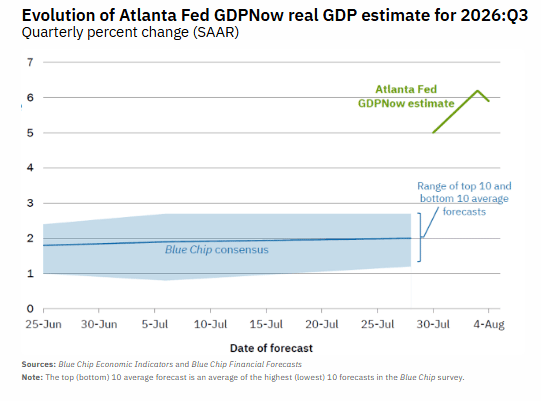
The Atlanta Fed’s GDPNow model early estimate for September quarter real GDP growth is a very strong +5.9%. That will come down, but probably not as far as the Blue Chip economists at only +2.0%.
 Click for larger graphic
Coming Events
All times below are ET, and most presentations and slides are archived on the companies’ websites so you can listen to them.
Friday, August 7
July payrolls – 8:30am
Tuesday, August 11
ON – Onsemi – 12:30pm – KeyBanc Technology Leadership Forum
QUIK – QuickLogic – 5:30pm – Earnings conference call
Wednesday, August 12
QUIK – QuickLogic – Unspec. – Canaccord Genuity Annual Growth Conference
CMPS – Compass Pathways – 8:00am – Canaccord Genuity Annual Growth Conference
Consumer Price Index – 8:30am
INO – Inovio – 4:30pm – Earnings conference call
ENVX – Enovix – 5:00pm – Earnings conference call
Wednesday, August 19
QUIK – QuickLogic – 1on1s – Needham Semiconductor & SemiCap 1×1 Conference
Big Tech: The Biotech & Digital Dominators MegaShift
There are at least four ways to make money in the stocks of these large, growing, dominant companies. You can:
* * Buy a stock and hold it
* * Buy a stock and write a call option against it
* * With a Level IV options account, write an out-of-the-money put option
* * With a Level IV options account, write an out-of-the-money put option and use part of the premium to buy an out-of-the-money call option
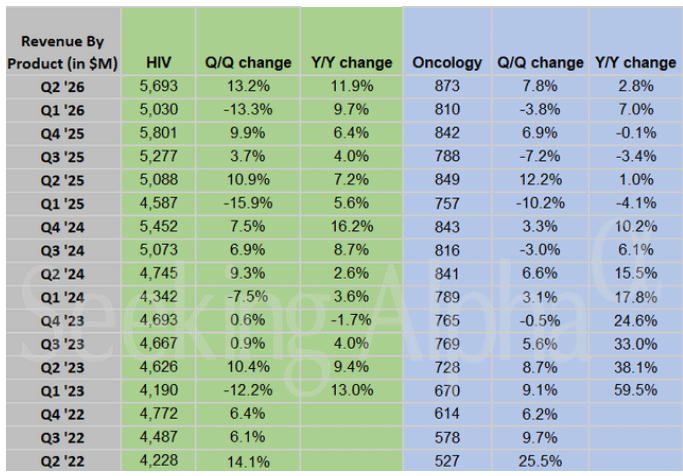
Gilead Sciences (GILD – $130.66) reported June quarter revenues up 10.2% from last year to $7.8 billion, ahead of the $7.4 billion consensus estimate. Due to an $11.2 billion one-time writeoff of acquired in-process R&D, they reported a $6.75 per share pro forma loss, smaller than the negative $7.25 consensus expectation.
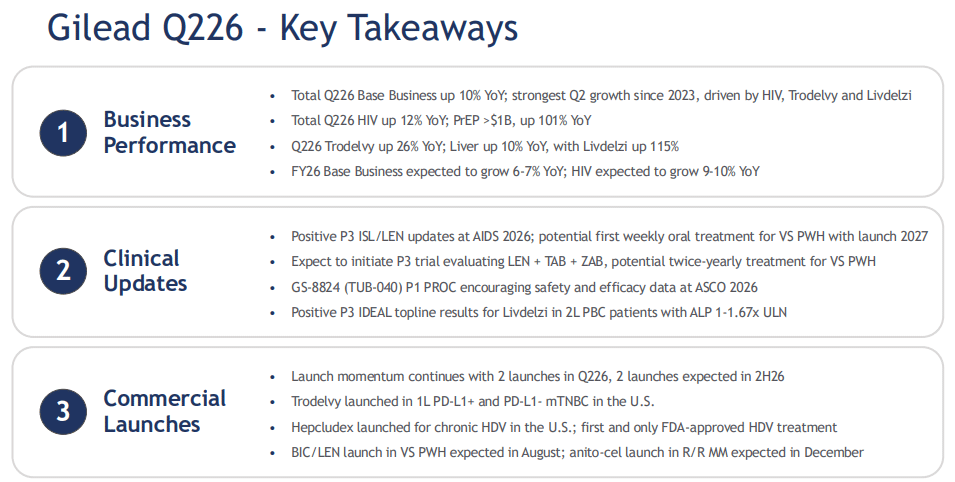
CEO Daniel O’Day said: “Gilead delivered a very strong second quarter, with 10% year-over-year revenue growth in our base business driven by our HIV portfolio, Trodelvy and Livdelzi. HIV sales grew 12%, reflecting continued strength in treatment and the rapid expansion of our PrEP business, supporting an increase in our base business revenue expectations for 2026. We also made significant clinical progress with three FDA approvals and three positive Phase 3 updates. We look forward to delivering on our many opportunities in the second half of the year including another two potential launches in oncology and HIV.”
 Click for larger graphic h/t Seeking Alpha
On the conference call, (WEBCAST HERE and SLIDES HERE and PREPARED REMARKS HERE and TRANSCRIPT HERE and 70pp RESOURCE BOOK HERE), Dan raised the lower end of 2026 revenue guidance from $30.0-$30.4 billion to $30.1-$30.4 billion. Guidance for the 2026 pro forma loss went from between negative 65¢ and negative $1.05 per share to between negative 30¢ and negative 65¢ per share. Excluding acquired in-process R&D and related financing costs, their full year pro forma earnings per share would be $8.50-$8.85.
 Click for larger graphic
GILD is a Long-Term Buy under $115 for a first target of $150.
Meta Platforms (META – $589.90) reported June quarter revenues up 27.9% to $60.8 billion, ahead of the $60.3 billion estimate. Now we know the answer to the quiz show question: “Name a company that was started in a college dorm room and taken to a quarter-trillion revenue run rate by its founder.”
But GAAP earnings per share of $6.18 were far short of the $7.22 estimate due to $3.58 billion in one-time legal and severance expenses. Adjusting for that, Meta earned $7.32 a share.
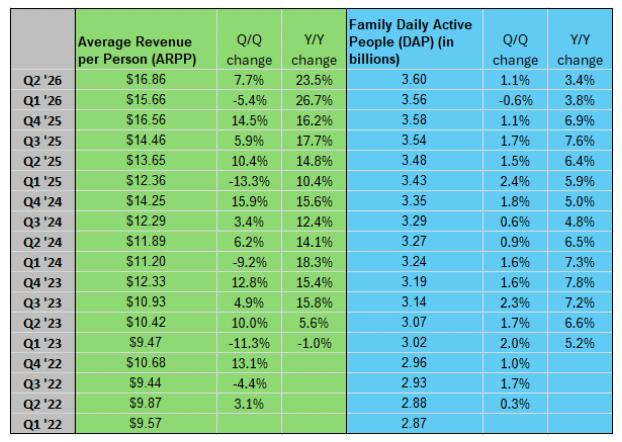
The revenue components were good. Family daily active people (DAP) was 3.60 billion on average for June, an increase of 3% year-over-year. Ad impressions increased by 14% year-over-year. The average price per ad increased by 12% year-over-year.
 Click for larger graphic h/t Seeking Alpha
But on the conference call, (WEBCAST HERE and SLIDES HERE and EARNINGS CALL TRANSCRIPT HERE and FOLLOW-UP CALL TRANSCRIPT HERE), CEO Mark Zuckerberg guided September quarter revenues to $61-$64 billion, below the $63.24 billion consensus. Then he administered the coup de grâce by raising the lower end of their 2026 capital spending range. It went from $125-$145 billion to $130-$145 billion. Free cash flow dropped an eyewatering 91% from $31.9 billion to just $784 million. Wall Street hated that and took the stock down as much as 10.4% the next day.
Wall Street is questioning whether ever-bigger AI investments are generating enough return – and that’s the wrong question. Of course they are not generating enough revenue right now, even though there is a shortage of compute power. It’s early days in the Fourth Industrial Revolution.
Mark Cuban and others have argued that (1) the price of computing steadily falls, so building compute facilities at today’s prices makes no sense, and/or (2) companies will want their AI models running in their own facilities to protect their proprietary data.
The answer to (1) is that it focuses on supply without acknowledging the huge increase in demand that is about to hit. The answer to (2) is that major companies have migrated lots of data and processes to the cloud, because it is cheaper to run and easier to manage. It’s not that hard to imagine cloud-based AI that does not steal data. If the cloud is not run by a frontier model company, there’s no incentive to steal it anyway.
The real problem is that OpenAI is likely to go bankrupt in 2027, before they can IPO. I’m looking at all the equity investments in them and all the commitments they have made for future compute capacity, many of which have been guaranteed by another company – looking at you, Nvidia. That’s the real problem and it doesn’t affect Meta. Zuck can build open-source AI models as good as the Chinese models, and monetize them with the Facebook/Instagram/WhatsApp user base and those who want to advertise on those platforms (which is everyone). META is a Buy under $705 for a long-term hold.
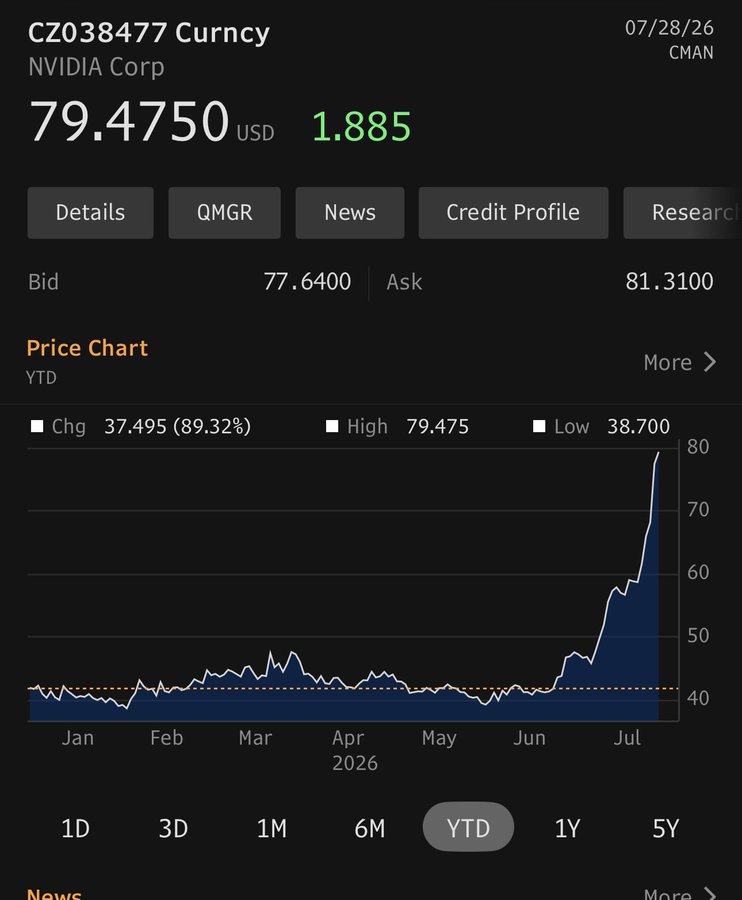
Nvidia (NVDA – $218.99) is a great company, and the world now acknowledges what I saw when I first visited CEO Jensen Huang in 2000: the man is a brilliant engineer. NVDA was one of the most obvious Buy recommendations I ever made. What I didn’t know then but do now is that he also is a brilliant strategic thinker.
Through a series of partnerships, investments, and guarantees, Jensen has accelerated and, you could even say, kickstarted the AI revolution. It’s to Nvidia’s benefit, of course, accelerating demand for their GPUs and letting him sell more GPU semiconductors at world-record profit margins.
It’s always been true that someday supply would catch up with demand, revenues would flatten, and profit margins would shrink. That’s the semiconductor cycle. The different perception I had, based on decades of following semiconductor companies, was that it would be a long time before supply caught up with demand – a lot longer than Wall Street thought. So I recommended the stock again at $116.86 on January 27, 2025.
But the dark side of the investments and guarantees is they have created an extreme vulnerability to OpenAI going bankrupt. I haven’t sussed out all the details yet, but with the help of Claude, I will. In the bankruptcy, the equity (some of which is held by Nvidia and SoftBank) will be wiped out. The debt holders will take control and probably sell the company to Microsoft. Whoever owns data centers contracted to OpenAI will look to Nvidia to make good on the take or pay compute contracts. If the price of compute is lower than the price Nvidia is guaranteeing, things could go south quickly.
The credit swap market already is worrying about these massive AI financing deals. The five-year CDS surged to 82 basis points, the biggest one-day jump since trading began in November 2025, driven by concerns over Nvidia’s $250 billion guarantees for an OpenAI-linked Ohio project and up to $350 billion more for chips, part of $750 billion in broader deals. Despite robust GPU rental demand with prices up 40%, the markets fear debt and special purpose vehicles (SPVs) could amplify risks if AI returns disappoint.
 Click for larger graphic
But NVDA is still a Buy for a $225 first target.
Onsemi (ON – $78.33) reported June quarter revenues up 8.8% from last year to $1.6 billion, essentially right on the $1.59 billion estimate. Pro forma earnings of 74¢ a share were just above the 72¢ estimate. On the conference call, (WEBCAST HERE and TRANSCRIPT HERE), CEO Hassane El-Khoury guided the September quarter to $1.65-$1.75 billion in revenue (midpoint: $1.70) and 81¢-93¢ pro forma earnings per share (midpoint: 87¢). The Street was at $1.67 billion and 84¢.
The stock move up after the call was due in part to the slightly better than expected guidance, but mostly because Hassane said: “Our second quarter results reflect the progress we have made in reshaping the business and our technology portfolio over the past several years and the strengthening demand environment. Supply is tightening in several growth areas, lead times are extending, and we are seeing increases in both orders placed within lead time and customer escalations. We now expect AI data center revenue to more than double in 2026 and we have expanded our role in the NVIDIA MGX ecosystem.”
The company won two power supply platform contracts with Great Wall, a leading China cloud infrastructure power supplier, and continues to add content in US hyperscalers AI deployments. They had design wins supporting Amazon Web Services (AWS) power supply and battery backup systems.
Power Solutions Group revenues were up 19% from last year and 13% from the March quarter to $829.0 million, reflecting strength in orders from AI data centers.
Free cash flow margin expanded from approximately 7% to 27% year-over-year. Free cash flow quadrupled from last year to $425.4 million, and they used $332 million of it to buy back stock. CFO Thad Trent said: “Given the improving demand outlook, we expect sequential gross margin expansion throughout the year. We are implementing a second round of price increases and expect to see the benefit over the next several quarters. Given the accelerated ramp in AI data center demand, we prioritized shipments to AI data center over automotive and industrial.”
On the Q&A, the Needham analyst asked whether AI data center is above the prior $500 million target. Hassane answered: “We’re not breaking it out beyond that at this point,” while emphasizing, “we are seeing momentum, we’re seeing strength.”
Jefferies kept its Buy rating with a $115 target price. They wrote: “AI data center is emerging as the key growth driver with growth (we estimate 200% Y/Y) outpacing most other Analog companies, while Industrial and Auto saw only modest improvements. Lead times, book-to-bill and utilization are increasing, supporting sequential gross margin expansion through year-end.”
The company finished the quarter with $3.9 billion in cash and has scheduled an Investor Day for September 16. They’re also presenting at the KeyBanc Technology Leadership Forum next week. I am raising the ON Buy Limit from $60 to $80, still for a $130 first target.
Palantir (PLTR – $155.92) jumped 29.4% after they reported yet another blowout quarter last Monday. Revenues grew 94.0% – that’s ninety-four percent – compared to last year to $1.94 billion, handily beating the $1.81 billion estimate. They beat on the bottom line, too, reporting pro forma earnings per share of 41¢, 6¢ above the 35¢ estimate.
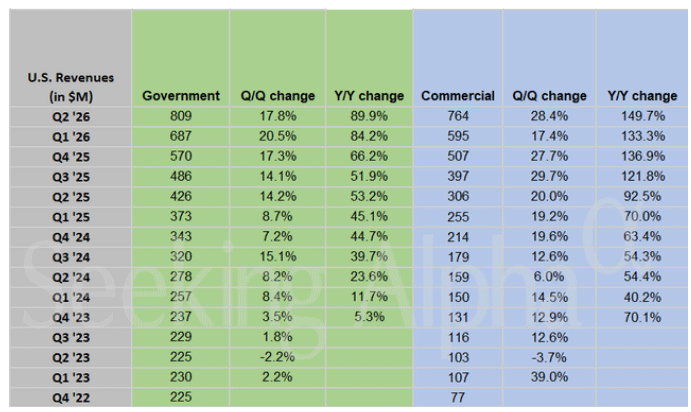
US revenue grew 115% year-over-year and 23% quarter-over-quarter to $1.573 billion. That included US commercial revenue, up 149% year-over-year and 28% quarter-over-quarter to $764 million, and $809 million of US government revenue, up 90% year-over-year and 18% quarter-over-quarter.
 Click for larger graphic h/t Seeking Alpha
They closed 220 deals of at least $1 million, of which 98 deals were over $5 million. 73 of those 98 deals were over $10 million. The closed total contract value (TCV) of $3.373 billion was up 49% year-over-year. That included a record-setting $2.132 billion of US commercial TCV, up 153% year-over-year. The US commercial remaining deal value (future revenues) of a record $6.238 billion was up 124% year-over-year and 27% quarter-over-quarter. AIP is working!
As if that wasn’t enough to goose the stock, on the conference call, (WEBCAST HERE and SLIDES HERE and PRESIDENT’S LETTER HERE and TRANSCRIPT HERE), CEO Alex Karp raised 2026 revenue guidance to $8.150– $8.158 billion, up 82% from 2025 and far above the $7.72 billion consensus. You will not be surprised to hear the stock was up $37 or 29.5% on Tuesday.
Alex also guided the September quarter to $2.160-$2.164 billion, comfortably above the $2.0 billion estimate. He said: “Demand for AI sovereignty has now been unleashed, and Palantir is the only company that has demonstrated it can transform tokens into actual economic value. Our customers trust us to provide them with maximal control over their operations, data, and decisions. Their competitive advantage should never become the training data for future models…The sovereign AI revolution makes us very optimistic about the future.”
Yeah, me too. But not Jefferies, who maintained their Underperform rating but nudged up its target price from $70 to $80. They wrote: “We are fundamental fans of PLTR, but valuation leaves little room for a normalization in growth or execution slippage. Bulls will point to accelerating revenue and larger deal sizes as evidence that the flywheel is still strengthening. Bears will focus on the sharp step-up in comps, ongoing international decel, and a valuation that already embeds sustained outperformance. On a relative basis, we see more compelling risk/reward in hyperscalers (MSFT)(AMZN) and in other AI software names (SNOW) offering strong secular growth at more attractive valuations. We therefore continue to view PLTR as a relative underweight despite another exceptional operating quarter.”
Good luck with that. PLTR is a Buy under $160 for a $200 first target.
PayPal Holdings (PYPL – $59.78) reported a solid June quarter, beating on the top and bottom lines, and raised their 2026 guidance. Revenues were up 4.8% from last year to $8.70 billion, beating the $8.47 billion estimate. Pro forma earnings of $1.38 a share beat the $1.28 estimate by 10¢.
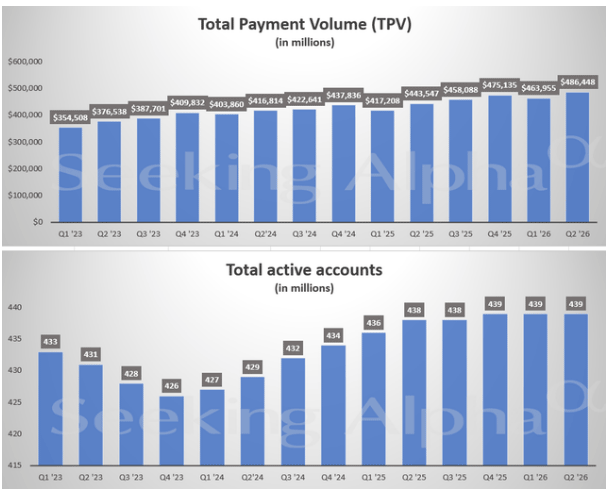
The number of payment transactions increased 8% to 6.8 billion and total payment volume increased 10% to $486.4 billion, above the $474.5 estimate. But an important metric I watch, transaction margin dollars, increased 1% to $3.90 billion. That was above the consensus for $3.74 billion.
 Click for larger graphic h/t Seeking Alpha
On the conference call, (WEBCAST HERE and SLIDES HERE and TRANSCRIPT HERE), CEO Enrique Lores guided the September quarter to a “low single digit decline,” which probably means $1.30-$1.31. The consensus expected $1.33. For the full year, he raised guidance from “low-single-digit decline to slightly positive’” compared to 2025’s $5.31, up to $5.38, just above the consensus for $5.31. Raising guidance in the midst of buyout talks is a good way to get the price up.
About the Stripe bid, he said what I expected: “While there is still significant work ahead, I have strong conviction in our direction and in our ability to execute. At the same time, we remain open and objective in evaluating opportunities. And if we see levers or a path that we believe would create superior value for our shareholders that executing our current strategy, we would, of course, carefully consider them…As a Board and management team, our responsibility is to maximize long-term shareholder value. We believe that executing the transformation strategy I have outlined will create significant value for our shareholders. That remains our focus.”
Longer term, he said: “We are diversifying our business model beyond Checkout with Financial Services across PayPal and Venmo becoming the largest driver of future transaction margin growth. We are making good progress on our plan to deliver at least $1.5 billion of gross run rate savings over the next 2 to 3 years.”
Free cash flow hit $1.8 billion and the company finished the quarter with $15.3 billion in cash, a nice nugget for any potential acquirer. PYPL is a Buy under $50 for a triple in three years.
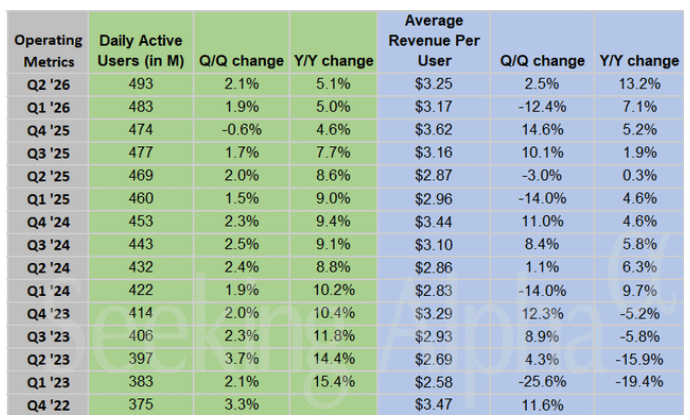
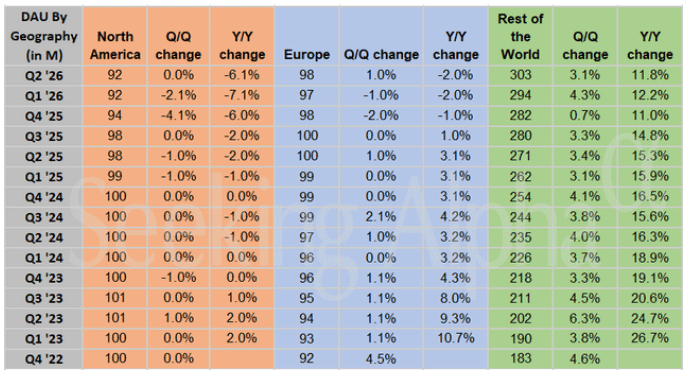
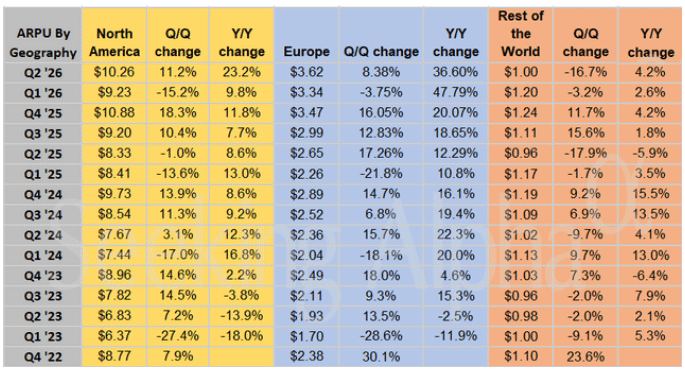
Snap (SNAP – $5.22) moved up after they reported March quarter revenues up a strong 18.6% from last year to $1.6 billion, a skotch above the $1.53 billion estimate. The World Cup undoubtedly helped. The GAAP loss of 10¢ a share was 2¢ better than the 12¢ loss Wall Street expected. Overall, Daily Active Users (DAU) and Average Revenue Per User (ARPU) were above expectations for 488 million DAU with ARPU of $3.15:
 Click for larger graphic h/t Seeking Alpha
But in the more mature North American and European markets, DAU are still down year-over-year, which is more than offset by strong ARPU growth:
 Click for larger graphic h/t Seeking Alpha
 Click for larger graphic h/t Seeking Alpha
On the conference call, (WEBCAST HERE and SLIDES HERE and PREPARED REMARKS HERE and Q&A HERE), CEO Evan Spiegel said: “We grew revenue by 19%, expanded margins, and generated positive free cash flow while improving advertising performance and rapidly growing our direct revenue business. We remain focused on serving our 971 million monthly active users, delivering measurable value for advertisers, and investing with discipline to increase free cash flow per share over time.” He guided the September quarter revenues to a range of $1.70-$1.74 billion, above the $1.69 billion current consensus. Evan expects modest further growth in infrastructure costs and raised guidance slightly from $1.60-$1.65 billion to $1.65-$1.70 billion for the full year, mostly for AI and machine learning.
Asked why the company is making such a big bet on AR glasses with competition from Meta, Evan said he believes Snap is a “first mover, placed to our strengths as an innovator.”
Bullpucky.
Wall Street is rightfully suspicious of the SPECS investment. The $2,000 augmented reality glasses will be launched on September 16, and I expect them to flop. BNP Paribas wrote: “We believe the level of investment and expected return on SPECS is still a question mark, potentially impacting near-term margins as competition within augmented reality wearables increases.”
Morgan Stanley wrote: “Snap’s core business performed better than expected, but we think the company needs to deliver consistently faster growth (ads or subscriptions) and showcase ROIC on its still aggressive SPECS investment in order to re-rate shares higher.”
What these worthies are missing is that the current price of SNAP stock already discounts a SPECS failure. It drastically undervalues the core business, which is an obvious beneficiary of using AI to accelerate advertising revenues through better ad creation and targeting. In spite of the AI infrastructure spending, free cash flow more than quadrupled from last year’s June quarter to $121 million. They finished the quarter with $2.66 billion in cash after paying off $2.5 billion in convertible notes due from 2026 to 2028. SNAP is a Buy under $11 for a $17+ target.
SoftBank (SFTBY – $17.75) has been selling publicly traded assets like Alibaba and T-Mobile that were part of its hard book value to fund investments in OpenAI. I met Masayoshi Son in Japan when we wanted to invest in SoftBank before its IPO, and I really mean it when I say that he is smarter than me. But if he’s going to sell assets I can value to make ever-larger investments is a company I think will go bankrupt next year, we have to get off that train sometime.
The question is when. Right now, the net hard asset value of SoftBank is about $525 billion, and at today’s close it had a market capitalization of about $202 billion, or roughly 38.5% of the value of its assets. SoftBank would have to sell for over $45 a share to reflect ts hard book value.
Now, I know that they couldn’t get the current price for an asset if they dumped all their stock on the market at once, and I know they would have to pay capital gains taxes. So I’m willing to cut that $45 to $30 and, reflecting Masa’s pivot to private investments in OpenAI, reduce my target price to $30 – still a 67% gain from here. And if we don’t get it by the end of the year, we may have to sell anyway before OpenAI face plants. Hold SFTBY for a target of $30 as the discount to hard book value shrinks.
Small Tech
Enovix (ENVX – $4.26) makes a smartphone battery with enough power to lift a Lambo (nerd alert!):
ENVX is a Buy up to $20 for a 4-year hold to $100+ as their BrakeFlow lithium-ion battery takes market share.
Primary Risk: A new competitor invents a better battery.
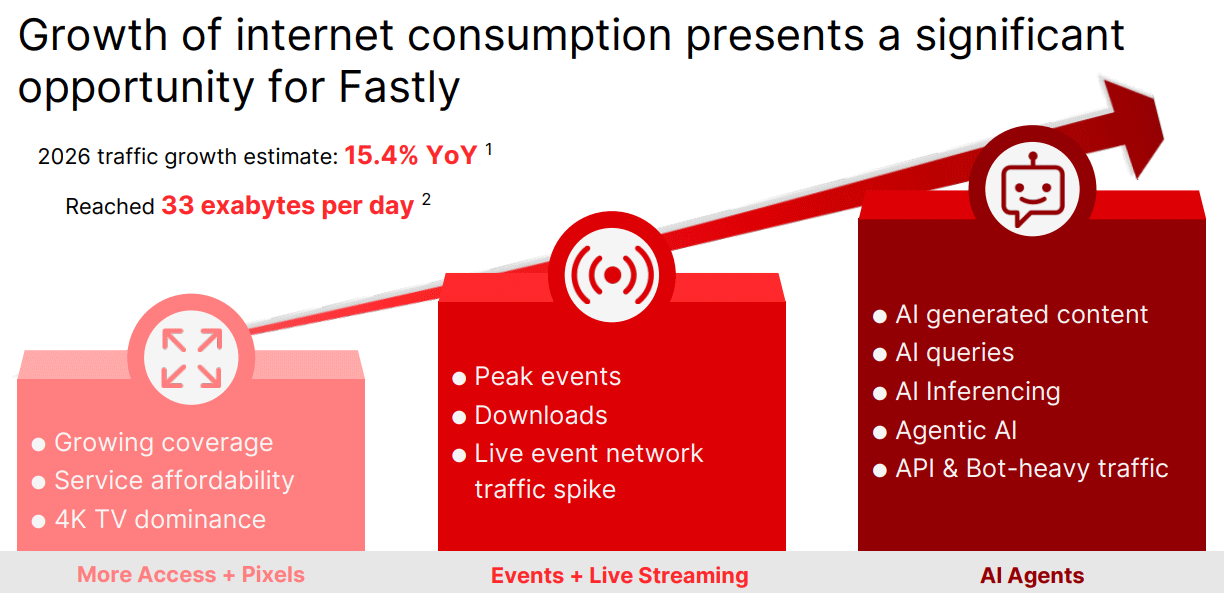
Fastly (FSLY – $22.68) reported a double beat for the June quarter. Revenues grew a strong 23.3% from last year to $183.32 million, well above the $173.92 estimate. Security-related revenue surged 43% year over year to $41.7 million. Their gross profit margin hit a record 65.8% and pro forma earnings per share hit 15¢, more than double the 7¢ estimate. It was their fifth consecutive quarter of improving net retention rate and sixth consecutive quarter of positive free cash flow.
On the conference call, (WEBCAST HERE and VERY GOOD SLIDES HERE and INVESTOR SUPPLEMENT HERE and TRANSCRIPT HERE), CEO Kip Compton guided the September quarter to $184.0-$190.0 million in revenue (consensus: $179.82 million) and 11¢-13¢ pro forma earnings per share (consensus: 6¢). 2026 free cash flow will be $40-$50 million.
Kip said: “Record second quarter results reflect strong execution and the deep trust customers place in our technology and our teams. Our platform strategy is driving business momentum, giving us the confidence to raise our full-year outlook.”
 Click for larger graphic
He raised the 2026 revenue estimate to $732.0-$746.0 million in revenue (consensus: $718.59 million) and 50¢-54¢ pro forma earnings per share (consensus: 33¢).
And on this news the stock dropped 12.9% today. It was a classic Wall Street rug pull to shake out stock from some weak retail hands. After all, somebody has to pay for the kid’s summer camp. I am raising the FSLY Buy Limit to $25, still for a 3- to 5-year hold to $50+.
Primary Risk:Content and applications delivery networks are a competitive area.
PagerDuty (PD – $11.10) was #6 on a list of the top profitable small caps trading at bargain P/E multiples during Q2 earnings with a Price/Earnings ratio of 4.29x and a Seeking Alpha profitability grade of A-. PD is a Buy up to $30 for a 2- to 5-year hold as their digital operations management Software-As-A-Service gains market share.
Primary Risk: Digital operations management is a competitive area.
Biotech MegaShift
If you can afford it – and it would not be too big a position in your portfolio – putting $2,000 into each of these speculative biotechs might be a good way to start. Buying these out-of-favor, fallen, or forgotten companies that can get important products through the FDA at very low market capitalizations seems like a good strategy to me.
Risks
Development-stage biotechs are subject to investor sentiment swings from wildly optimistic to excessively pessimistic – mostly the latter recently. After the Primary Risk for each company, I’ve added the clinical stage of their lead product, the probable time of their first FDA approval, and the probable time of their next financing.
As always, you need to think about an appropriate position size. You could buy a full position upfront and then just hold on, or buy some upfront and leave room to add more on the inevitable financings, transient clinical trial setbacks, and the like
AbCellera Biologics (ABCL- $6.53) reported June quarter progress. The unimportant numbers were revenues of $3.1 million and a GAAP loss of 18¢ a share.
On the conference call, (WEBCAST HERE and SLIDES HERE and CALL SUMMARY HERE and TRANSCRIPT HERE), CEO Carl Hansen said “The most important data readout this year is the top line results for ABCL635 in the treatment of moderate to severe hot flashes associated with menopause,. We completed enrollment and initial dosing of patients in June, well ahead of schedule… we expect a top line data readout very soon.”
In these Phase 2 results, I am looking for efficacy at least comparable to the two approved small molecules, at least a 20% better response than the placebo, and a reduction in frequency of at least two hot flashes per day with, of course, another clean safety profile. I expect them to progress ABCL635 to Phase 3 trials and bring this drug to a huge market.
Carl said both ABCL-688 and ABCL386 continue to progress through IND-enabling activities, and they expect both to enter Phase 1/2 trials in 2027. ABCL575 completed Phase 1 dosing and is on track for a readout in the December quarter, but they don’t expect to develop it past Phase 1. That program is dead.
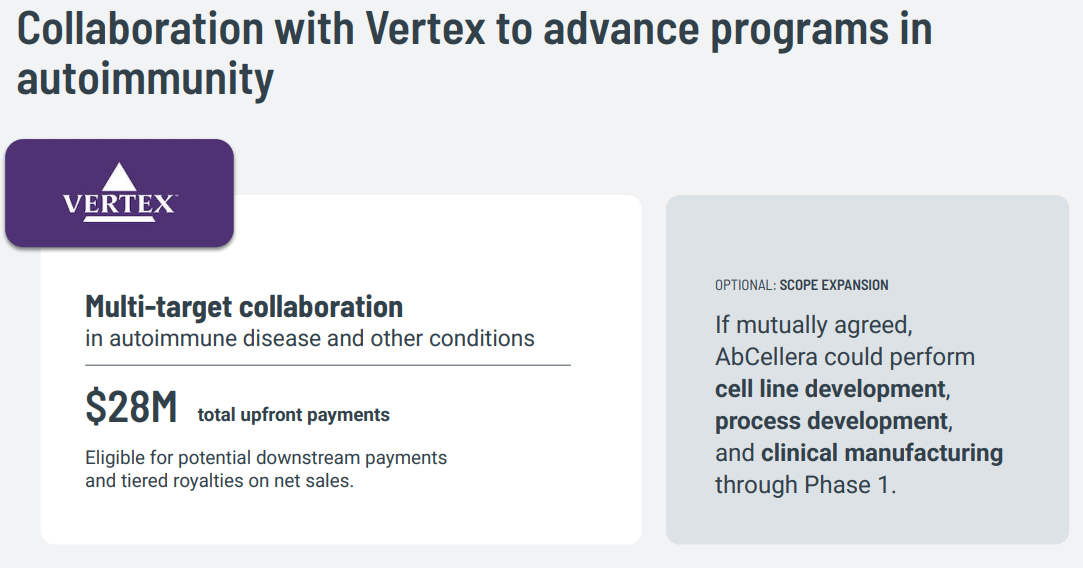
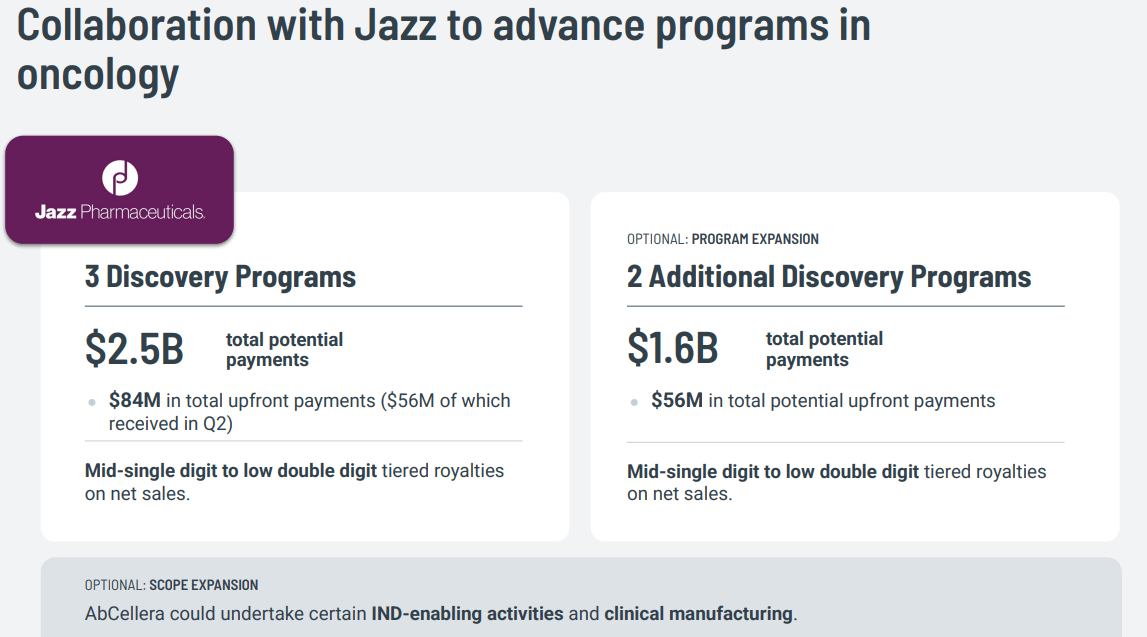
During the quarter, AbCellera signed two new T cell engager partnerships with Vertex and Jazz Pharmaceuticals that added over $110 million in cash to the balance sheet. Carl said AbCellera will receive $28 million in upfront payments from Vertex, and the Jazz collaboration includes three confirmed discovery programs with $84 million in total near-term upfront payments and eligibility to receive over $2 billion in potential downstream payments. The total potential deal value with all five programs included is over $4 billion.
 Click for larger graphic
 Click for larger graphic
AbCellera still has $565 million in cash and $110 million in available government funding, enough to fund them for at least three years. Buy ABCL up to $6 for a long-term hold to $30 or more.
Primary Risk: Partnered and owned drugs fail in the clinic.
Clinical stage of lead product: Partnered: Various Owned: Phase 2
Probable time of next FDA approval: 2027-2028
Probable time of next financing: 2029-2030 or never
Akebia Therapeutics (AKBA- $0.95) reported June quarter revenues down 21.6% from last year to $49 million as generics hit Auryxia sales, but that was right on the consensus expectations. The GAAP loss was 3¢ a share, compared to the 4¢ loss expected.
Vafseo had a good quarter, with net product revenue of $21.3 million, up 34.8% from $15.8 million in the March quarter. More than 10,500 patients are now on the therapy, up 41% from the end of March. The total number of prescribers increased 17% from the end of March to approximately 1,200.
One of the biggest reasons Vafseo will eventually become standard of care was shown by the interim analysis of the VOICE trial with U.S. Renal Care. The data showed a statistically significant improved safety outcome in patients treated with Vafseo dosed three times per week versus erythropoiesis stimulating agents (ESA), driven by a significant reduction in hospitalizations. Under Medicare’s ESRD Quality Incentive Program (QIP), the Centers for Medicare & Medicaid Services (CMS) monitors clinic-level outcomes, including hospitalization rates and readmissions. Clinics that underperform on these quality metrics face across-the-board reductions of up to 2% on their Medicare bundled reimbursement base rates.
In addition, clinics participating in alternative payment models (such as Kidney Care Choices (KCC) or End-Stage Renal Disease Seamless Care Organizations (ESCOs)) take on financial accountability for the total cost of care of their attributed patients. In these value-based arrangements, high hospitalization rates lower the clinic’s chance of earning performance-based shared savings bonuses. In two-sided risk models, excess hospitalizations directly lead to financial penalties or repayment obligations for the dialysis provider.
In their rare kidney disease pipeline, Akebia started a Phase 2 open-label basket trial of ebribafusp (previously known as AKB-097 and ADX-097), a next-generation complement inhibitor, in patients with IgA nephropathy, lupus nephritis, or C3 glomerulopathy. It will enroll up to 30 patients dosed subcutaneously once a week. It is an open-label trial, and we will get initial data in 2027.
On the conference call, (WEBCAST HERE and TRANSCRIPT HERE), CFO Erik Ostrowski said: “Upon the expected end of Vafseo’s TDAPA period on December 31, 2026, we plan to price Vafseo within the price range of ESAs. We expect Vafseo unit sales volumes to increase in 2027, but we expect 2027 revenues to decrease compared to 2026 due to this lower planned price.”
That is what caused the stock to drop 26% today. Akebia is in intense discussions with Fresenius (the other major dialysis provider), including sharing the hospitalization data from the VOICE trial, and a commitment by that company to Vafseo would move the stock up. I assume from the lack of news that the FDA has no intention of reducing the size of the trial they want for a non-dialysis label expansion.
Akebia finished the quarter with $155.5 million in cash, enough for at least two years. Buy AKBA up to $4 for the Vafseo launches in the EU, UK, and US. I think GSK and/or Amgen will make a bid for the company.
Primary Risk: Vafseo doesn’t sell in the US.
Clinical stage of lead product: Approved
Probable time of next approval: 2027
Probable time of next financing: Never
Compass Pathways (CMPS – $13.55) reported a June quarter GAAP loss of $1.88 a share due mostly to a meaningless non-cash $1.52 loss from the fair value adjustments related to their warrants. On the conference call, (WEBCAST HERE and SLIDES HERE and TRANSCRIPT HERE), CEO Kabir Nath said the company now has “highly statistically significant positive Phase III primary endpoint readouts” and “demonstrated durability through 6 months from both our trials,” adding, “We believe we have largely derisked the clinical and regulatory profile of COMP360.”
Kieth said the FDA has already started to review some modules that they’ve already submitted, and confirmed that Compass will complete the NDA filing in the fourth quarter. Their National Priority Review Voucher should get them approval at the end of February, followed by federal DEA and state rescheduling of psilocybin, with a launch in the first half of 2027. The DEA is under an April 2026 executive order to begin the 90-day rescheduling process as soon as Phase 3 trials succeed, and not to wait for FDA approval.
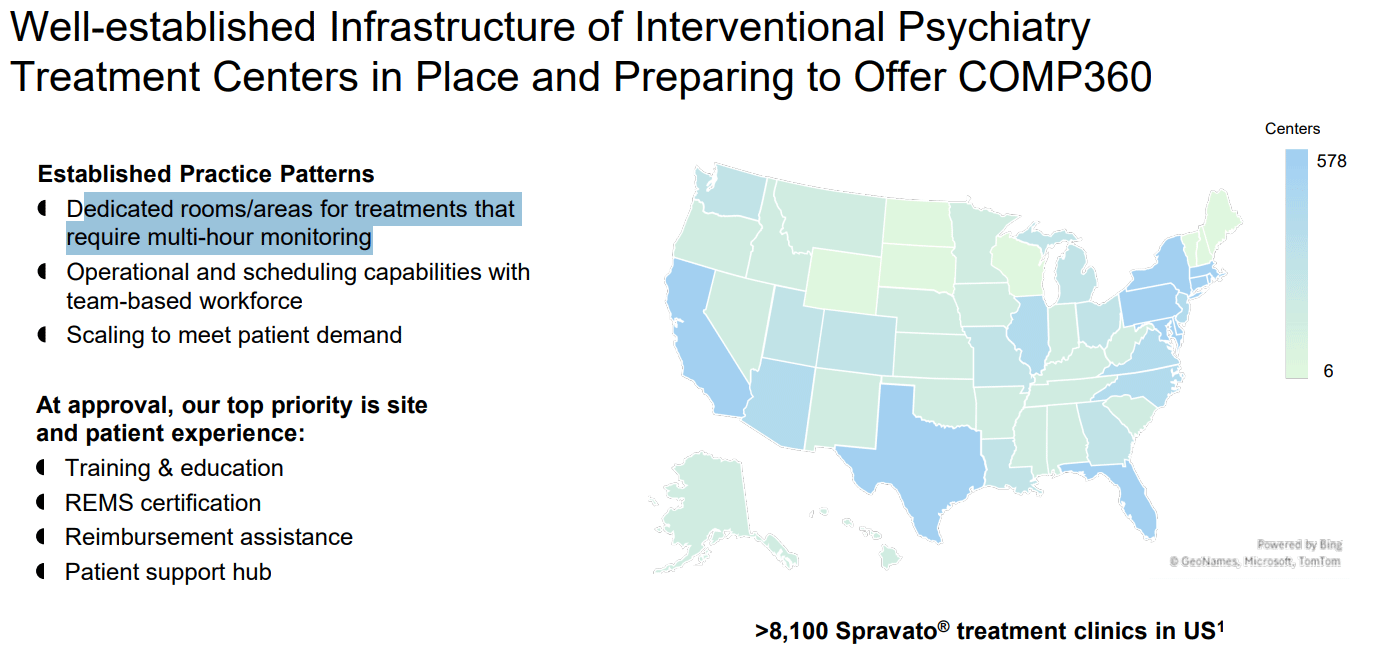
Well over 1,000 people are already trained in administering COMP-360, although they will need additional Risk Evaluation and Mitigation Strategy (REMS) training post-approval. The company expects a minimum REMS monitoring duration of 6 hours. There are 8,100 Spravato treatment clinics in the US with dedicated rooms/areas for treatments that require multi-hour monitoring.
 Click for larger graphic
The field sales team will cover all 8,000+ sites. Management believes COMP360’s infrequent dosing opens up the possibility of a wider patient radius. In a company survey, 90% of interventional psychiatrists said that they would prescribe COMP360 within the first year. Compass probably will partner ex-US commercialization and focus on getting a label expansion for Post-Traumatic Stress Disorder (PTSD).
They finished June with $433.3 million in cash and $50.7 million in debt, with a cash runway into 2028 – long past the February/March FDA approval of COMP360. CMPS is a Buy under $10 for a very long-term hold to $200.
Primary Risk: Their drugs fail in the clinic.
Clinical stage of lead product: Phase 3
Probable time of first FDA approval: 2027
Probable time of next financing: Never
Editas Medicine (EDIT – $2.90) reported their June quarter and, as usual, did not hold a conference call with a slideshow lest someone find out they exist and possibly – heaven forfend! – buy the stock. CEO Gilmore O’Neill said: “During the second quarter, we continued preclinical work to support advancing EDIT-401 into a single ascending dose, open-label Phase 1/2 study. We also presented new preclinical data demonstrating the ability of a single dose of EDIT-401 to achieve rapid and significant reductions in multiple atherogenic lipoproteins in non-human primates along with a promising preclinical safety profile, reinforcing EDIT-401’s potential as a best-in-class, one-time treatment for hyperlipidemia.”
EDIT-401 showed a 90% or greater mean reduction in lipoproteins, including LDL-C, Lp(a), and the really important one, ApoB. This is going to be the next Lipitor. The company is on track to submit a Clinical Trial Notification (CTN) in Australia this month and continues to progress towards initiating a Phase 1/2 clinical trial of EDIT-401 in patients with Heterozygous Familial Hypercholesterolemia (HeFH).
The trial will evaluate the safety, tolerability, and efficacy of a single dose of EDIT-401 and is designed in two parts. Part 1 is a single ascending dose, open-label trial at four sites across Australia and New Zealand. Editas will give us a data update in the first quarter of 2027. Then they will complete enrollment in Part 1, the dose-finding portion of the Phase 1/2 trial of EDIT-401, with topline data results available later in 2027.
The company finished the quarter with $211.6 million in cash, enough to carry them past the 2027 data releases into the second half of 2028. EDIT is a Buy under $6 for a double in 12 months and a long-term hold to much higher prices.
Primary Risk: Other companies’ gene-sequencing drugs fail in the clinic.
Clinical stage of lead product: Partnered: Approved. Owned: Going into the clinic mid-2025.
Probable time of next FDA approval: 2030
Probable time of next financing: 2028
Inovio (INO – $0.67) did another $20 million units sale at 95¢ a unit, consisting of 21.1 million shares of stock with 42.1 million $1.10 warrants. INO-3107 is all but certain to get FDA approval next year, but the company has to keep raising money to stay alive until then. I thought the FDA would allow a 6-month review of INO-3107, but apparently the Agency is going to stick with 10 months, so I took the stock off the Near-Term Buy list. However, INO is still a Buy for a very long-term hold.
Primary Risk: Their drugs fail in the clinic.
Clinical stage of lead product: Phase 3
Probable time of first FDA approval: October 2026
Probable time of next financing:After FDA approval
TG Therapeutics (TGTX – $49.55) reported their June quarter and raised Briumvi sales guidance again. Revenues were up 70.3% year-over-year to $240.34 billion, beating the Street estimate for $229.79 million. But they missed on the bottom line, reporting GAAP earnings of 5¢ a share compared to the 31¢ estimate. That took the stock down, because the problem was a more than tripling of R&D costs over the period to ~$95.3 million. SG&A expenses also rose ~48% to ~$82.1 million.
On the conference call, (WEBCAST HERE and TRANSCRIPT HERE), CEO Michael Weiss raised his full year revenue guidance from $925 million to $950 million, above the $942.51 million consensus, and raised the Briumvi US revenue guidance to $890-$905 million.
Mike said the June period was a step-change quarter for the company, driven by a higher 2026 Briumvi outlook and multiple pipeline catalysts, including positive ENHANCE Phase 3 results to simplify IV initiation starting in the middle of 2027, and a fully-enrolled subcutaneous Phase 3 program with results expected around year-end or early next year. Subcutaneous approval in 2028 would expanding their market coverage beyond the 60% -65% physician-administered segment and has the potential to more than double Briumvi’s current addressable market.
He also pointed to their early-stage expansion into myasthenia gravis, schizophrenia, and broader azer-cel indications. His priorities are investing in Briumvi, pipeline advancement, selective business development, and share repurchases.
TG ended June with $612 million in cash. Buy TGTX under $30 for a target price in a buyout of $40 or more.
Primary Risk: Briumvi, the MS drug, fails to sell.
Clinical stage of lead product: Approved
Probable time of next FDA approval: NM
Probable time of next financing: Never
Inflation MegaShift
Gold ($4,298.70) is slowly recovering after its intense test of $4,000 support, as is silver ($61.79 today) after exploring $56.
Miners & Related
Coeur Mining (CDE – $15.65) reported June quarter revenues up a sensational 128.7% to a record $1.1 billion, but that was $90 million short of expectations. They wiffed the bottom line, too, with pro forma earnings of 12¢, less than half the 26¢ estimate, although that included a one-time non-cash 10¢ accounting charge driven by the acquisition of Rainy River’s stockpile inventory.
On the conference call, (WEBCAST HERE and SLIDES HERE and TRANSCRIPT HERE), CEO Mitchell Krebs said they have started buying back stock under the recently approved $750 million buyback program, with $110 million bought starting in May.
The New Afton and Rainy River ramp-ups are running months behind prior assumptions. They now expect to generate $1.58 billion of free cash flow in 2026, down from $2 billion, based on $4,000 gold, $60 silver, and $6 copper. Their commitment to maintaining a net cash position creates a path to an investment-grade credit rating.
Cash is up 10x from last year to $1.1 billion. CDE is a Hold as gold goes higher.
Primary Risk: Prices of precious metals fall due to US dollar strength.
Dakota Gold (DC – $5.52) CEO is “retiring up” to be Co-Chairman of the Board of Directors. Jack Henris, who Quartermain hired a year ago as President and Chief Operating Officer, becomes CEO. For our purposes, nothing has really changed and DC is a Hold for a $6 target as gold goes higher.
Primary Risk: Robert Quartermain doesn’t find enough gold. Secondary risk: Prices of precious metals fall due to US dollar strength.
First Majestic Silver (AG – $17.28) had strong revenue growth in the June quarter, up 57.3% from last year to $415.5 million. Silver production rose 3% year-over-year to 3.8 million ounces, while gold production was up 2% to 34,660 ounces. But pro forma earnings of 21¢, although up dramatically from last year’s 4¢, were well below the 25¢ consensus estimate. Earnings before interest, taxes, depreciation and amortization (EBITDA) were up 110% from $119.9 million in last year’s quarter to $252.3 million. They booked $194.6 million in free cash flow.
On the conference call, (WEBCAST HERE and SLIDES HERE and TRANSCRIPT HERE), CEO Keith Neumeyer raised their 2026 silver production guidance by 10% and their gold production guidance by 7%. They are now holding $78 million in gold and silver inventories, presumably for higher prices.
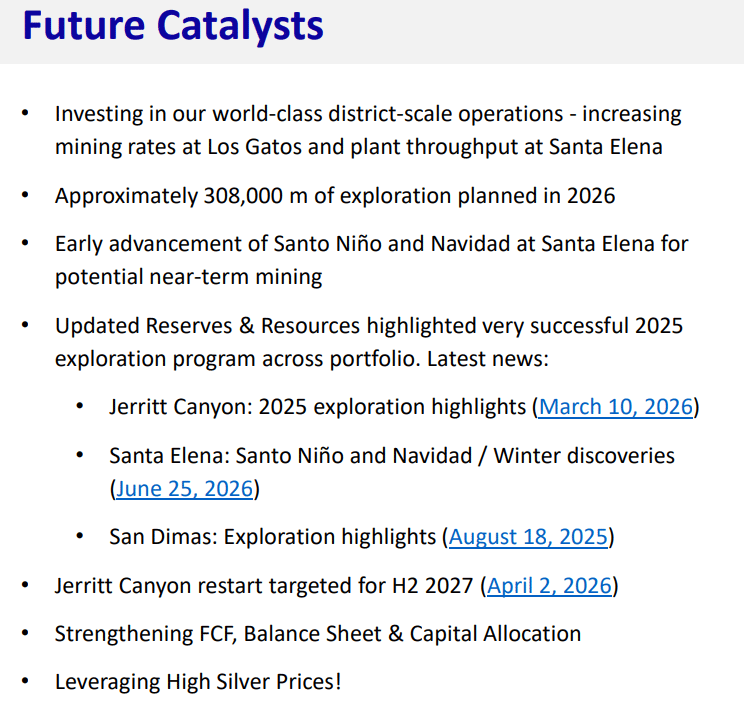
In the quarter, their cash cost per attributable payable silver equivalent ounce was $18.06 and their all-in sustaining cost (AISC) was $25.68 – both below guidance. One of their future catalysts is restarting the Jerritt Canyon gold mine in the second half of 2027.
Click for larger graphic
During the quarter, First Majestic bought back 1.2 million shares for $22.7 million, and finished the quarter with a record $1.25 billion in cash. AG is a Buy under $11 for a $23 next target price as production increases and the price of silver rises.
Primary Risk: Prices of precious metals fall due to US dollar strength.
Royal Gold (RGLD – $218.11) reported June quarter revenues up 114.9% from last year to $450.5 million, $2.28 million under the $452.78 million consensus. But pro forma earnings per share on $2.56 did beat the $2.54 estimate. The revenue split by commodity was 76% gold, 12% silver, and 8% copper.
On the conference call, (WEBCAST HERE and SLIDES HERE and TRANSCRIPT HERE), CEO Bill Heissenbuttel said: “This is our second complete quarter of consolidated financial results after significantly growing our business in 2025 and our strong first half of 2026 clearly demonstrates a material change in the scale of our portfolio. Our diversified portfolio produced revenue from a variety of properties with no one asset contributing more than 13% of revenue and only two assets generating more than 10% of revenue.”
That, of course, is aimed at the long-standing criticism of Royal Gold that they weren’t as diversified as Franco Nevada and Wheaton Precious Metals (which was true before the Sandstorm acquisition), and therefore didn’t deserve a comparable valuation. Bill has been doing all these Renmark Financial presentations to get the word out that they are now diversified.
During the quarter, they repaid $200 million on the revolver and plan to fully repay it by the end of the year. Also, during the quarter they bought back 147,000 more shares for $30 million, and Bill said: “You should expect this amount to be bought back each quarter.”
RGLD is a Buy under $180.
Primary Risk: Prices of precious metals fall due to US dollar strength.
Cryptocurrencies
Cryptocurrencies are a diversifying asset that offer a unique opportunity to make (or lose!) a lot of money quickly.
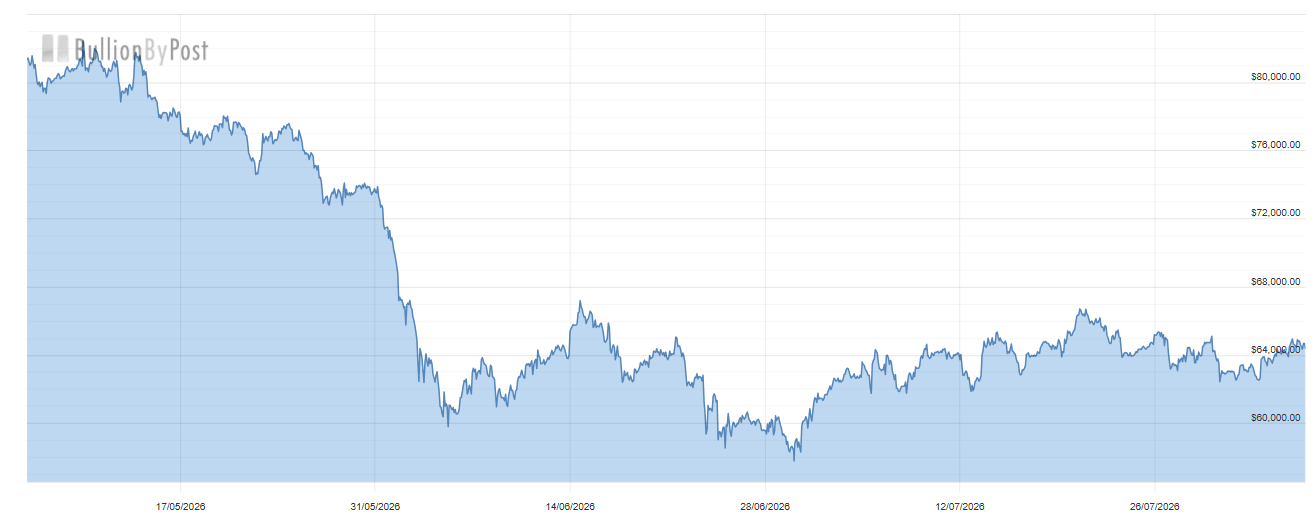
Bitcoin (BTC-USD on Yahoo – $64,374.99) is slowly recovering from the news that Michael Saylor at Strategy (formerly Microstrategy) sold some coins.
 Click for larger graphic
Maybe it really is this simple: Buy 500 days before the every-four-years bitcoin halving and sell 500 days after the halving.
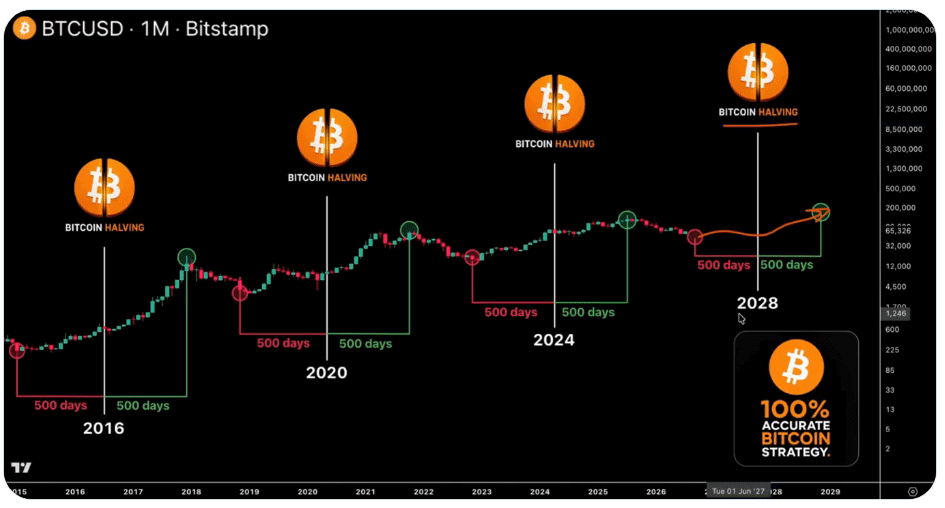 Click for larger graphic h/t @zeroXhope
BTC-USD, ETH-USD, IBIT, and ETHA are Strong Buys.
Primary Risk: Bitcoin falls due to over-regulation or is surpassed by another cryptocurrency.
iShares Bitcoin Trust (IBIT- $36.49) remains the cheapest and easiest way to buy bitcoin. IBIT is a Buy for the 2028, 2032, and 2036 halvings.
Primary Risk:Bitcoin falls due to over-regulation or is surpassed by another cryptocurrency.
iShares Ethereum Trust (ETHA- $14.40) remains the cheapest and easiest way to buy ethereum. ETHA is a Buy for the coming explosion in token-funded start-ups.
Primary Risk: Ethereum falls due to over-regulation or is surpassed by another cryptocurrency.
Commodities
Oil – $78.23
Oil is down from $92.19 two weeks ago as it turned out that the Islamic Revolutionary Guard Corps (IRGC) that possibly is running Iran (or not) is “mostly peaceful,” and the often wrong but never in doubt International Energy Agency admits a recovery in world oil demand is underway, but stubbornly insists global oil demand will decline by 1 million barrels per day this year. That is more than twice as large as the loss experienced during the peak of the Global Financial Crisis.
JPMorgan wrote: “The demand loss is so extraordinary that it naturally invites skepticism, particularly given that the global economy grew above potential during the first half of the year.”
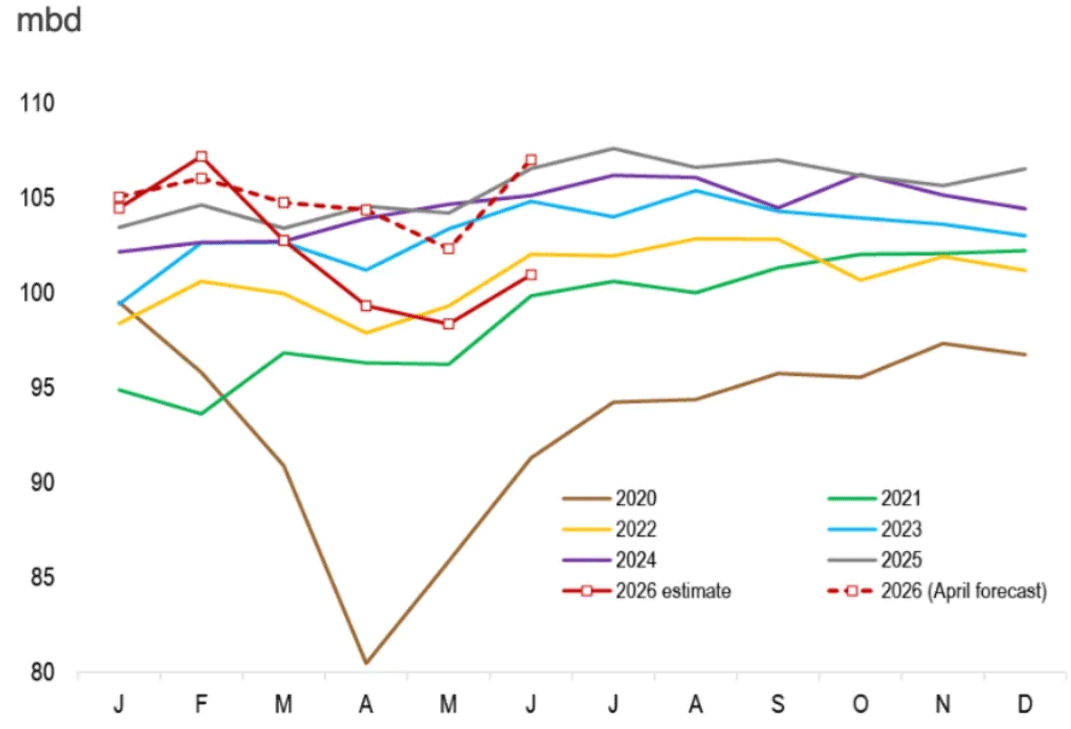
Click for larger graphic
While it is true that countries in Southeast Asia curtailed workweeks and European airlines cut back on flights, I think what’s happening is that some countries without clear international reporting standards are releasing barrels from unknown reserves. China is the biggest suspect here. As JPMorgan wrote: “Visibility into global oil inventories is poor even across OECD countries, and it is considerably worse elsewhere.”
Oh, well, maybe green energy will save us. “A wind turbine is nine hundred tons of steel, concrete, and copper, hauled up a mountain by diesel trucks, built in a factory running on Chinese coal. That is the green part…Calling it green is like calling a cheeseburger a salad because there is lettuce on it.” – Charles Garcia, Capital Mischief
The September 2027 Crude Oil Futures (CLU7.NYM – no trades – last was $68.79) are a Buy under $75 for my lowered $100+ target. Only buy futures for all cash; do not use margin.
The United States 12 Month Oil Fund, LP (USL – $48.18) is a Buy under $40 for a $100+ target.
Vermilion Energy (VET – $10.97) reported a good June quarter and raised their annual production guidance. Revenues were up 24.9% year-over-year to $554.34 million and GAAP earnings per share hit 88¢. On the conference call, (WEBCAST HERE and SLIDES HERE and TRANSCRIPT HERE), CEO Dion Hatcher said production averaged 125,789 barrels of oil equivalent per day (boe/d), 71% of which was natural gas. That was above the top end of their guidance. Year-to-date, production per share is up 6% from 2025, and he increased 2026 production guidance about 2% to 121,000 to 123,000 boe/d, 70% natural gas.
The company generated $231 million of fund flows from operations, fully funding $110 million of exploration and development capital spending, and leaving them with $122 million of free cash flow,. They reduced their net debt by another $70 million to $1.22 billion at the end of June and reiterated their $1.0 billion target. Dion increased their return of capital framework to target 40% to 60% of excess free cash flow to shareholders, up from the previous 40% target. During the June quarter, they returned $26 million to shareholders through $21 million in dividends and $5 million of stock buybacks.
Vermilion’s exposure to the European natural gas market, where current prices are over $25 per million British thermal units (MMBtu), let them realize an average natural gas sales price more than triple the AECO benchmark (the main Canadian benchmark trading hub for natural gas, located in Alberta). They have hedged approximately 30% of estimated corporate net-of-royalty production out to the December quarter of 2028.VET is a buy under $11 for a target price of $24 or more.
Primary Risk: Oil and natural gas prices fall.
Energy Fuels (UUUU – $12.90) reported June quarter revenues up 496.4% to $25.11 million, but nearly quadrupling revenues was not enough – they were way under the Wall Street consensus for $31.57 million. The GAAP earnings per share loss of 13¢ also was worse than the expected 4¢ loss.
Overall, they sold 310,000 pounds of uranium at $80.48 per pound for total uranium revenues of $25.0 million. That was made up of spot sales of 150,000 pounds of U3O8 at an average of $84.92 per pound, and long-term contract sales of 160,000 pounds at $76.33 per pound. Although spot sales were lower than the March quarter because prices weakened, they maintained there 2026 guidance for 2.0-2.5 million mined pounds and 1.5-2.0 million processed and sold pounds.
On the conference call, (WEBCAST HERE and TRANSCRIPT HERE), new CEO Ross Bhappu said: “Our second quarter financial results reflect continued strong performance in our uranium segment, including industry leading low production costs, and actions we have taken to deliver on becoming the first, true, rare earth mine-to-magnet platform in the West. The continued investment in our transformation into a vertically integrated global critical materials company resulted in a net loss driven primarily by transaction-related costs associated with our planned acquisitions and higher operating expenses as we invest in people and projects. Importantly, these investments are being made from a position of financial strength, with nearly $1 billion of working capital at quarter-end. We believe the operational progress achieved this quarter, combined with our disciplined investment in growth, provides a strong foundation for future value creation.”
They ended the quarter with 1.64 million pounds of finished U3O8 in inventory and another 590,000 pounds in ore to be processed. At the end of July, the spot price of U3O8 was $86.50 per pound and the long-term price was $97.00 per pound, according to TradeTech.
China is building out 30 to 40 gigawatts of nuclear power stations in the next five years, all of which will require uranium. In addition we have the Sprott Physical Uranium Trust (SPUT) that is, apparently legally, trying to corner the uranium market. Uranium is going much higher, and the rare earth mine-to-magnet initiative will get us a high valuation. UUUU is a buy under $8 for a $30 target.
Primary Risk: Uranium prices fall.
* * * * *
RIP Joe Melson, co-writer of:
* * * * *
Saint-Saëns: Danse macabre (for Marimba and Piano)
h/t Vitaliy Katsenelson CFA
* * * * *
Your fixing everything you own is behind a login your family doesn’t have Editor,

Michael Murphy CFA
Founding Editor
New World Investor
All Recommendations
Priced 8/6/26. Check out the complete Portfolio page HERE.
Buys
These are the stocks everyone needs to own because transformative events are happening over the next year or two, and I expect to hold them long-term.
Tech Dominators
Gilead Sciences (GILD – $130.86) – Buy under $115, first target price $150
Meta (META – $589.90) – Buy under $705 for a long-term hold
Nvidia (NVDA – $218.99) – Buy under $225 for a long-term hold
Onsemi (ON – $78.33) – Buy under $80, first target price $130
Palantir (PLTR – $155.92) – Buy under $160 for $200 first target price
PayPal (PYPL – $59.78) – Buy under $50, target price $150
Snap (SNAP – $5.22) – Buy under $11, target price $17+
Small Tech
Enovix (ENVX – $4.26) – Buy under $20; 4-year hold to $100+
First Trust NASDAQ Cybersecurity ETF (CIBR – $96.39) – Buy under $75; 3- to 5-year hold
Fastly (FSLY – $22.68) – Buy under $25 for a 3- to 5-year hold to $50+
PagerDuty (PD – $11.10) – Buy under $30; 2- to 5-year hold
QuickLogic (QUIK – $13.87) – Buy under $10, target price $40
ARK Venture Fund (ARKVX – $55.50) – Buy for SpaceX IPO
$20-for-$1 Biotech
AbCellera Biologics (ABCL – $6.53) – Buy under $6, target $30+
Akebia Therapeutics (AKBA – $0.95) – Buy under $4, target $20
Compass Pathways (CMPS – $13.55) – Buy under $15, hold a long time for a 20x return
Editas Medicines (EDIT – $2.90) – Buy under $6 for a double in 12 months and a long-term hold to much higher prices
Inovio (INO – $0.67) – Buy for a very long-term hold
TG Therapeutics (TGTX – $49.55) – Buy under $30 for buyout at $40+
Inflation
A Short-Sale or REO House – ($415,400) – Hold
Bag of Junk Silver – ($61.79) – hold through silver bull market
Sprott Gold Miners ETF (SGDM – $69.58) – Buy under $50, target price $75
Sprott Junior Gold Miners ETF (SGDJ – $85.05) – Buy under $60, target price $100
Sprott Physical Gold and Silver Trust (CEF – $42.33) – Buy under $35, target price $60
Global X Silver Miners ETF (SIL – $83.26) – Buy under $60, target price $100
Paramount Gold Nevada (PZG – $1.39) – Buy under $1, first target price $10
Royal Gold (RGLD – $218.11) – Buy under $180
Cryptocurrencies
Bitcoin (BTC-USD – $64,374.99) – Buy
iShares Bitcoin Trust (IBIT – $36.49) – Buy
Ethereum (ETH-USD – $1,904.74)– Buy
iShares Ethereum Trust (ETHA- $14.40) – Buy
Commodities
Crude Oil Futures – September 2027 (CLU7.NYM – no trades – last was $68.79) – Buy under $75; $200+ target
United States 12 Month Oil Fund, LP (USL – $48.18) – Buy under $40; $100+ target
Vermilion Energy (VET – $10.97) – Buy under $11; $24+ target
Energy Fuels (UUUU – $12.90) – Buy under $18; $30 target
EQT (EQT – $51.60) – Buy under $70; hold for much higher prices ($100+)
Holds
These are holds but not sells – yet. They could get moved back to one of the buy categories if their prices drop or outlook improves, or they could become sell recommendations in the future.
SoftBank (SFTBY – $17.75) – Hold for $30 target
Medicenna (MDNAF – $0.27) – Hold to see structured financing terms
ScyNexis (SCYX – $5.20) – Hold through the after-effects of the reverse split
Coeur Mining (CDE – $15.65) – Hold for higher gold prices
Dakota Gold (DC – $5.52) – Hold for higher gold prices
First Majestic Silver (AG – $17.28) – Hold for higher silver prices
Freeport McMoRan (FCX – $68.18) – Hold for higher copper prices
Publisher: GwynRose LLC, 5348 Vegas Drive, Suite 868, Las Vegas, NV 89108
New World Investor does not act as a personal investment adviser or advocate the purchase or sale of any security or investment for any specific individual. The recommendations and analysis presented to members are for the exclusive use of members. Members should be aware that investment markets have inherent risks and there can be no guarantee of future profits. Likewise, past performance does not assure future results. Recommendations are subject to change at any time. Nothing in this presentation should be considered personalized investment advice. No communication to you by Michael Murphy or any of our employees or contractors should be deemed as personalized investment advice.
Copyright ©GwynRoseLLC 2026
New World Investor Mastermind Group
1. Post unto others as you would have them post unto you.
2. Keep it clean, like a 1950s family television show. Your alter ego can run free on Twitter.
3. NO PERSONAL ATTACKS! If you don’t like the stock, don’t trash the person. Everyone is responsible for their own due diligence and investments.
4. Don’t post here about politics or religion – you aren’t going to change anyone’s mind. Again, NO PERSONAL ATTACKS!
5. The investment implications of something going on in politics or religion is OK.
6. Of course, there’s never a reason to slur someone based on race, religion, gender, sexual orientation, or country of national origin.
7. Please, no snark!
 Print This Post


First?!
MM–your AKBA analysis is just cut and paste from before. You fail to mention that the TDAPA revenue of V of $15K (discounted to perhaps $10K) annually drops to $2K on Jan 1, 2027. How much would V revenue have to increase in order for AKBA to break even in 2027 and beyond? Even with VOICE and standard of care designation, what % of TAM of 550K dialysis patients is required to get those revenues post TDAPA? Through Q2, there were 10,500 patients on V, only 2% of the dialysis TAM after 1.5 years of launch. Bad management spins their failure by saying there is lots of room to grow. DUH.
Most subscribers ignore your buy and target prices because they are out of date and include NO hardnosed balance sheet analysis. If you show that AKBA can eventually produce profits enough to fund the excellent pipeline, then the stock can recover. Meanwhile, it is insane to continually say, “buy up to $4, blah blah.” IMO the stock could bottom at 50 cents or lower in Q1 of 2027. A reverse split is quite likely, so the bottom could be in the single digit pennies 1 year from now. I say to bullish subscribers, hold for now. Remember the wipeouts on APTO and other NWI bios. Read my AKBA posts on the previous board.
Even worse, you have AKBA as your top choice in CHRONOLOGICAL order. Nobody except you believes that AKBA is the best place for money right now. You are not paying attention.
Outside of AKBA, I appreciate your macroeconomic analysis, but I can’t invest relying on your buy prices.
the entire Top 5 has been a cut and paste for seems like years – same old tired failed biotech’s and missing the AI trade entirely. Sorry MM I had been a supporter and defender of you in the past when you were attacked by the likes of the “other Mike” but you clearly have given up on any new, insightful research into any of the emerging investment opportunities which is what we look for from you – rather you cling to old, tired biotech hopes.
Steve, what’s your current strategy on your AI plays–IREN, etc.? Your timing was excellent on those, but can we get in after corrections? MM missed the early opportunities that you found, but he and other experts like Harris Kuppersmith (KUPPY) of Praetorian (sp?) Capital point out the over investment risks. Any new ideas?
I am guilty of not taking profits on CAPR when I was up 3-4X, and APTO when I was up 6X and then lost nearly everything, although it was a small position.
The AI trade is still very early with a lot more upside on Chips (esp memory with Micron, SK Hynix), data centers (IREN, CIFR, CRWV) and the top 2 NBIS, NVDA – short sellers tried to scare investors out of the trade calling it a bubble but we are in perhaps the 3rd inning of 9 innings. AI will create more wealth than the internet did. One more new one I like – TE for energy. Something else you should all look into – high dividend plays, I own CHPY (40% yield) and QQQ1 (14% yield) – both have shown nav appreciation while returning these yields – I’m making my car and utility payments with these as they pay weekly dividends.
On July 29 I bought IREX in the 8’s. Today up more than 80% in two weeks. It is very volatile. AI has a long way to go. Chips, memory, data centers, energy and more components. Some people have made more than 1000% on these companies in a short time. There will be many more companies that will have great returns. Micron with a pe of 8 and many years of orders will continue growing. I buy MUU (2 times).
Gary and Steve–what newsletters are you following on AI–chips,memory, data centers, energy, etc? None of us have any expertise in these fields, so how do you know who is correct? How do these writers know they are correct? All financial writers are suspect. All they have to do is tell a good story, survive until they are thrown out of the business, all the while making short term profits that may vanish overnight. I am looking for things that haven’t already moved 5-10X. Most of them are vulnerable to big corrections.
FWIW, I have a lifetime subscription to Forecasts and Strategies. Mark Skousen just retired and handled it to Jim Woods. Woods is broadly educated, but he seems to be crazy and out on a limb. In his Aug NL, he says DXYZ is a great opportunity. This is an ETF of venture capital type companies few have heard of. I don’t trust YF data of PE of 7 with EPS over $3. Woods has SPY in his portfolio. I will probably put much of my spare cash into SPY. At 73, I have almost no tolerance any more for risk, so SPY is fairly safe. A nice bonus is the favorable tax treatment. Very low turnover, so there are minimal tax liabilities every year. Just hold for 10+ years, and capture decent long term growth on most of your portfolio with minimal taxes that eat you alive every year. Stay away from most mutual funds which have high tax liabilities. I have a decent next egg, so all I need is safe growth for most of it.
I have reluctantly come to accept that my strength in medical analysis doesn’t count when dealing with a criminal FDA whose major clients include Big Pharma who use the FDA to destroy small companies because they want to buy the small companies at fire sale prices. The same applies to deserving small companies like ENVX, where large battery manufacturers can destroy ENVX. Still, ENVX depends on the market deciding that ENVX can compete, rather than corrupt govt agencies like the FDA deciding who they can destroy.
13 months ago I heard about CIFR and IREN from Eric Jackson on Making Money with Charles Payne on Fox Business. The show has many excellent investment advisers. Charles talks about these advisers success. This stock went up over 100% in less than a year every week. Recognizing the winners. In time you learn who you have enough faith to follow their stock picks.
Koh_kim on Instagram has excellent explanations of tech companies.
https://www.instagram.com/koh_kim/reel/DbtSHSFo6Xz/
Mike Alfred, he’s on the board of many companies (including IREN) he does Spaces on X to provide his outlook and recommendations – he’s heavily invested in IREN, CIFR, OPEN (revolutionizing purchase and sale of real estate), ASTS (crypto play), NOVO (for GLP drug), WINN (most undervalued resort casino play), a couple liquor stocks (entire industry is cheap).
Ivana Delevska analyzes the evolving AI value chain on ‘Making Money.’
https://www.foxbusiness.com/video/6402704384112
https://www.youtube.com/watch?v=oRjA5UTCHNg
now its your turn to give me a trade that I can 2-3X my money?
META, NVDA, PLTR, MU. GLW, but I missed the AI trade entirely? Also INTC and TWLO in Boomberg on Substack.
The AI trade has become a subprime real estate trade due to the circular financings and loan guarantees, and it’s going to blow up when OpenAI goes bankrupt next year. I will have my shopping list ready – it’s going to be like AMZN at $9 after the dotcom crash.
I’m just finishing the analyses for the California Technology Stock Letter relaunch, and it looks like there will be only two data center-related stocks. Both make the semiconductor equipment needed to make the chips. The others: 1 robotics/defense, 1 software, 1 quantum computing, 2 healthcare software/services, and 3 – oh, no! – biotechs (one of which will be CMPS).
MM – whatever component of the AI trade booms or wanes in years to come, many of us made very good money in the past 6-12 months by getting in early to a few of the “obvious” benefactors like memory, photonics replacing copper (lots yet to go on these 2) data centers, chips, we saw this coming why didn’t you? I talked about these stocks’ 6 months ago on this chat board – isn’t that what your near-term top 5 is supposed to be for, not the tired old picks. The next rotation is into photonics (replacing copper wire), space. quantum computing, robotics/humanoids, AI agents, (every office and home will have 3-4 of these minimum). There is so much happening with advancing technology how can you not want to buy into it? Why dont you have a special section for the AI trade?
Why call it California TSL ? I think you are limiting your market. Turns some people off, plus not really related to CA.
BTW, i am a happy Californian.
maybe Im stealing your thunder but this is for Gary, JGFMD and the other regulars on this chat board:
ASML: The Gatekeeper of the Entire Supercycle
ASML is the only company on Earth that makes EUV and High NA EUV lithography systems. Every 3nm and 2nm logic chip, every leading-edge HBM die, every NVIDIA, AMD, and Broadcom AI accelerator currently shipping passes through an ASML machine. There is no second source. There is no workaround. If TSMC, Samsung, or Intel wants to build a leading-edge fab, they fly to Veldhoven and get in line.
Q1 2026 delivered revenue of $10.34 billion at a 53.0% gross margin, and management raised the full-year outlook to €36 billion to €40 billion. The 2030 model targets €44 billion to €60 billion in revenue at 56% to 60% gross margin, and the year-end backlog already sits at $45.06 billion. CEO Christophe Fouquet said “demand for chips is outpacing supply” and customers are accelerating capacity expansion plans backed by long-term agreements with their own customers. ASML is up 51% YTD. It is the single most important industrial company in the world, and the market is just starting to price it that way.
Please explain how OpenAI bankruptcy with kill the AI trade. Will NVDA, TSM, other chips like SKHY, photonics like LITE, Coherent all plunge in a year? Are any of them safe for another several years?
What do you think of Steve’s idea, ASML?
When OpenAI goes down, Nvidia is on the hook to pay for their compute contracts – billions of dollars. Many companies like SoftBank and Microsoft will have to write off billions in equity investments. That environment usually causes investors to dump everything related, even stocks like Meta, which has no financial exposure.
Of course, bankruptcy doesn’t mean a company necessarily disappears. I think Microsoft might pick them up cheaply to get the people.
There is a Chinese company that has a lithography machine that matches ASML. I don’t want to be in that fight at 63x earnings. Great technology, though.
MM–I am usually a contrarian and like to buy hated stocks. But when the fundamentals are so bad as they now look with AKBA, I have to sell when it looks like it could plunge much further before it recovers. I made this contrarian mistake with VLD and kept buying as it plunged. Only John Miller was lucky enough to make money by giving it more time.
AKBA- Agreed. MM cites the CFO on the lower guidance but offers no comments. Obviously AKBA’s Vafseo launch has turned into a clusterf**k for which magmt appears to have zero solutions. It is their fault as they should have anticipated the slow-moving decision making of the large DOs that have been using ESAs for 35 years; and they should have done it withing the 2-year period of TDAPA. Now it appears too little too late as the larger number of future patients will pay a much lower price per treatment. The stock would have held higher prices had AKBA been able to easily get label extensions to the NDD market. Thanks to the hard-assed FDA they could not and here we are, below $1. They are also awkwardly trying to switch the narrative to their pipeline. As good as that is, it will be years and very expensive clinical trials whose outcome is unforeseeable.
If I buy other small bios, they must already have partnerships with a Big Pharma who will know how to deal with criminal FDA and other agencies to get approval. The small bio can get good royalties and a small % of revenues in exchange for financial security. The fallacy of my wishful thinking is that the CEO’s of small bios get big salaries unrelated to performance. I actually want genuine responsible CEO’s of large companies to command many millions in salary commensurate with performance.
I remain with a small position in NGENF, mainly because no other treatment exists for severe neurological injury. But to be cynical, even there, a big Pharma who wants to buy NGENF cheap can scheme with the FDA to reject the treatment, plunge the stock, and pick it up cheap. Go try to sue the FDA. “Don’t fight City Hall.” So I reluctantly turn to partnered small bios as the only way to make money in this criminal field of bios.
I have a modest position in ACHV which seems to have confident approval.
AKBA-I think you are correct in pointing out that mgmt. opted for a larger number of authorized shares precisely for using a secondary AFTER a reverse split to raise funds for the pipeline assets. For current shareholders that scenario, that mgmt. seemingly decided is a legitimate way to raise funds under duress, would actually be a very poisonous dish to swallow.
Actually I just mentioned the common scenario that once a reverse split is done, people see the incompetence of mgmt and then aggressively short the stock. In theory a RS shouldn’t matter because the market cap remains the same. But most traders don’t think logically. They are looking at any excuse to get away with shorting enough to make quick profits. Institutions are as guilty as retails in wanting to buy shares at higher prices. Why don’t they say, “I want to buy a 1% position. If I buy 1 million shares at $1, that’s the same as buying 100K shares at $10?
An office colleagues’ husband is a big pharma rep specializing in rare diseases. He gets stock in the BP companies he works for, and has done smashingly well in a few situations. I put in a question for him–what is a good % uptake after 1.5 years of launch? Anyone can ask AI, but I know him and trust his experience. Another office colleague who has only 500 shares of AKBA thought 50%. I think at least 10%. 2% totally sucks, and I told my colleague not to bias him by first reporting merely 2%. We’ll see what the BP rep says. I want to hear her report on how loud and hard he smacks his head after he hears 2%. Also remember that CEO JB delayed launch by 9 months because he thought getting TDAPA first would pay off for the delay. It might have paid off if JB wasn’t sitting on his ass instead of marketing during the 9 months. What a fck up from JB. Any buyout of AKBA by a BP might be for under $2. BP will say to AKBA–you stupid FCK head, take it or leave it. Starve and go bankrupt if you don’t like it. Then we grab your company on your death bed for fire sale pennies. That’s enough to pay your funeral expenses.
I don’t care about the hype about standard of care. What counts is whether the BP cares, and brings in the sales. How fast insurances implement penalties for higher rates of hospitalization is anyone’s guess. Big Davita and Fresenius are in no hurry. Davita will not bring in much in Q3. Q3 ER will be mediocre, and the stock will be way under $1, maybe 60 cents by early Dec days after Q3 ER. Why the fck are Davita and Fresenius so slow in getting sales of V moving? Established ESA contracts, that’s why.
I agree with much of what you say, but I think you are way too negative. You wrote: “TDAPA revenue of V of $15K (discounted to perhaps $10K) annually.” They just reported $21.3 million in revenues for a single quarter, up 34% sequentially. They’ll probably exit the year at a $150 million run rate. With the volume discount, US Renal Care may already be down to the ESA price.
I also think Butler did the right thing by not launching until he had TDAPA. He would have had to launch at the ESA price and probably would have sold nothing. Plus, he had to get the companies to put in the systems to use it and the doctors to ask for it.
But I agree with you that he screwed up the launch, at least two ways. First, he was surprised that the case managers switched patients back from Vafseo to an ESA when their hematocrit had a transient drop. He obviously knew about the transient drop, but never told us. It’s hard to believe someone could not realize that would be a problem and prepare the case managers.
Second, he was surprised that the at-home patients he repeatedly called “the low-hanging fruit” might not follow their medication schedules, when everyone knows that’s always a problem. So now Vafseo is being dosed on a schedule the FDA never reviewed or approved.
I also agree that the FDA is blocking the non-dialysis trial by asking for way too many participants. Vafseo is approved in Japan for non-dialysis, so there’s lots of real-world data. Maybe Amgen is leaning on them.
I expect Fresenius, the second-largest provider in the U.S. (~34% market share), to sign on anytime. In the longer term, I have no doubt that Vafseo will displace ESAs to become the standard of care. In addition to just plain doing a better job, the lower hospitalization and mortality rates are compelling.
It is time to replace Butler.
Thanks for your further analysis. Vafseo has a good future for dialysis. My main issue is the financial data. OK, they exit 2026 at a $150 million annual run rate. But in Jan 2027, cut it to $30-40 million at post TDAPA rates of $2000-2500 annually. I doubt USRC is down to $2500 from $15,500. Maybe $6-7000. (When I buy nutraceuticals from companies, the MD price is 50% of consumer prices. For specialty products, I have to pay 70%. For MD prices, above $500 gets further 5% discount. Above $1000, a discount of 10%. Of course, drugs are MUCH more expensive, but you get the idea.) I highly doubt that USRC is getting 85% discount from TDAPA today.
Auryxia is finally declining and may stabilize at generic rates of $10-15 million/Q or $40-60 million annually. For Q1 2027, add V at $7-10 million to get $17-25 million on Q1 ER. The stock will sell off badly in mid April as losses will be YUGE. The stock may plunge to 50 cents or worse, not counting the risk of reverse split and further dilution. In Q2, maybe V sells double Q1 at $14-20 million, for total revenue of $24-$35. Still big losses, stock down the chute to 25 cents in mid Aug, 2027. Optimistically, double V sales again in Q3 to $28-40 million. Add generic Auryxia for total revenue of $38-53 million. Stock further down the toilet. Maybe breakeven in Q4, reported early Feb 2028. Now they finally have the money for the excellent pipeline. But JB will still take his huge multimillion buck salary, as the biggest welfare recipient of all time. So will the corrupt board. They will be forced by a big pharma partner at gunpoint to accept a modest salary. They will end up developing the pipeline, but will only be able to make royalties. The BP may buy out AKBA at $2 in 2030. Any higher will have to wait for actual commercial pipeline success in 2035. Many of us will be dead by that time. But the death spiral in AKBA will be alive and well.
If you still think I am too negative, substitute your own numbers for 2027 and beyond. Remember, post TDAPA numbers will be very low. Standard of care for V won’t be until mid 2027 at the earliest. Davita and Fresenius won’t move much until then. They are doing just fine with ESA contracts.
Please report back with your numbers. FIRST, get rid of your “buy up to $4” advice.
Gary, Steve and others interested in the AI trade. I have Lumentum (LITE) and Viavi buried in my broker statements. I didn’t remember precisely how I got ithem, or what they did. I “acquired” them by 4 purchases from 2001 to 2005. I now have modest gains in Viavi but huge gains in LITE over 20-25 years. Research shows that JDSU split or spun off these 2 companies 2015. MM was enthusiastic about JDSU, but I took a big loss on that. Little did I realize that my buys in JDSU would turn out big via spinoffs. LITE didn’t move until about 1 year ago. Now I learn that LITE and Coherent are the top 2 leaders in optical. Copper wire is insufficient for the needs of AI, so fiberoptic is now the standard. I am reading how these and other optical companies have a good future for the AI buildout over several years. Valuations are stretched as with any company starting its rapid growth phase. Analyst targets for LITE vary from $1100 to $5000, so I patiently hold. But I don’t buy any more at these prices.
My father was an electrooptical engineer from the 1960’s. He criticized me in the early 2000’s for my holdings in JDSU. He worked at Sperry Rand in the 50’s and 60’s, then Hughes Helicopter before it was acquired by McDonnell Douglas. He gave up on stock investing when he sold his IBM stock, and then had only T bonds. Lucky for him, he had bonds when interest rates were high and then plunged in the 80’s, 90’s. His experience showed that tech companies are the most competitive of any industry, so he thought it was foolish to invest in a basket of small techs. Even when a company seems to have leading tech, competition and short life cycles make profitability elusive. We are seeing this with QUIK. I have held QUIK for over 10 years and am merely breaking even.
My big techs are LITE and TSM in AI. I hold them, but would never buy at today’s prices or try to trade them.
My elementary experience with fiberoptics goes back to 1995 when I got my 1st CD player. The CD player could be used with ordinary analog interconnects from analog out to input on the preamp. It could also be used from digital out to digital in on a DAC (digital to analog converter). I used a digital interconnect using RCA plugs. There was a TOSLINK optical output, but I never tried it. Audiophiles wrote how the TOSLINK sounded inferior to the RCA plugs.
The GI doctors have been doing fiberoptic endoscopy for the stomach and colon for many decades. Obviously, current fiberoptics for AI are in a different world than my early encounters. Just be careful. No financial advisor understands this technology, but these advisors recycle talking points from other ignorant analysts. Fellow engineers at customer “hyperscalers” (that’s a new buzzword term) can talk with engineers at LITE, etc. But everyone else is a babbling idiot.
Ride the AI wave, but don’t overpay for any stock and decide on an exit strategy. This will be difficult. Nobody can give trustworthy advice on this.
I am now 73.5 years old. In a few years, I will cash out of my high risk stocks, take profits and put them in conservative ETF’s. SP500 ETF’s like SPY have outperformed equal weighted SP500 ETF’s like RSP, EQL. SPY and most others are overweight in high flying big techs, so they have outperformed the equal weighted ones in the last 2 years. Over 10 years, SPY has annualized gains of 15%, whereas RSP and EQL are 12%. They all have low turnover and tiny expenses, and low short term capital gains, so we can bank our millions and be happy with 11-12% compounded after tax growth for RSP/EQL or 14-15% SPY and clones. Then when you sell, you face low long term capital gains taxes. If you think big tech has more growth vs industrials for the next few years, go with SPY. If you’re lucky, the next few years of SPY might be better, and then switch into EQL. But SPY has almost 40% in big tech. Do I want to buy more shares of TSM at current $430? No, I hold what I have. EQL has some good tech stocks, but much lower %. For straight nontech, and less volatility, EQL is preferable to SPY. Yet industrial companies use AI and other tech as tools for increased productivity, so even buying stodgy EQL gives tech exposure. WMT has been a big winner. I hold my variable annuity from long ago. I have ridden the ups and downs of its pure tech mutual funds. So I already have lots of tech weighting, although most of them are mediocre techs, just like most of the NWI portfolio. Still, MM has had a few great winners. I thank him for JDSU (see my post on that) and TSM.
Maybe I can be patient and buy ENVX much cheaper than $4. SNAP?
I love Saint-Saens! One of my favorites is his lesser known Piano Trio 1 in F, op. 18, played here by Trio Jade:
https://www.youtube.com/watch?v=XLW34scPW4o&list=RDXLW34scPW4o&start_radio=1
Thanks for reminding me of this beautiful piece. The 2nd movement from 8-16 min is popular and haunting. To me, it is the central high point.
For the most popular and revealing of the great harmonic master that was Saint Saens, nothing rises to the heavenly level of “my heart at thy sweet voice.” I’ve played it in orchestra and heard it many times, but I still tearfully whimper every time. My favorite singers in this piece are Marilyn Horne, Maria Callas.
https://youtu.be/rwynxOAoKjo?si=dvEuTcrq3Qi0Qazw. Marilyn Horne.
https://youtu.be/nsNMP6_Q0Js?si=XKB5Mw_xq3QnPul8 Maria Callas
Other popular immortal works of Saint Saens–violin concerto no. 3, esp the serene last movement, Organ Symphony, The Swan (from Carnival of the Animals), Piano Concerto no. 2, Cello Concerto no. 1, Introduction and Rondo Capriccioso, a virtuoso violin crowd pleaser. I’ve been struggling to play some of the tough spots for 50 years. It has been well worth the struggle.
Yes to all! Let me add his Septet:
https://www.youtube.com/watch?v=cOXNzDKqnNs&list=RDcOXNzDKqnNs&start_radio=1
Gary and Steve–nearly all AI stocks have multiplied several times in the last year. Which stock can double in a year? I am tempted to say SK Hynix. P/E is cheap at under 10. But the stock has been up 500% in 1 year, 800% in 2 years. Despite new era reality, any stock that has skyrocketed is vulnerable to severe corrections. My LITE has not skyrocketed as much as SKHY, but its valuations are much more stretched. Today is a big correction.
Making Money with Charles Payne is entertaining, but the analysts won’t hold your hand at monthly intervals the way a newsletter can. It is easy for analyst guests to get excited and get listeners to buy, but nobody is home when corrections occur. I am considering MM’s upcoming California Stock NL, because he has been straightforward about his warnings of OpenAI bankruptcy and consequent crash in many non-AI stocks in panic. I want to follow this more, but so far it seems that all the AI bulls are ignoring the OpenAI risk factor.
July 29 there was a big correction. I am not sure why this happened but I bought good companies. MRVL dropped to 163 and 3 weeks later at 244. I bought MUU (2X Micron) at 19 and 3 weeks later it is 31. PE of 8. It has contracts for many years. These pull backs are great buying opportunities to buy companies that have contracts for many years. These big companies are the future.
I take some risks because I have a 401k that is professionally managed by one of the top advisers in the nation. I have almost caught up with my 401k.
I have 5 stocks that I bought after listening to the analysts on Charles Payne in the last 18 months that have more than doubled.
Congratulations. My concern is where we go from here. Any stock that has skyrocketed is vulnerable to corrections. Low PE’s are attractive, but often they are low because it is anticipated that earnings will shrink as the trend fades away. I wouldn’t leverage in anything. If you think MU has many years of growth ahead, just hold MU. Perhaps chips are later in the cycle than data centers, opticals, etc. I was nervous about the plunge in LITE yesterday, but I resolved to hold it but not to trade it. I doubt that swing traders in general do better than buy and holders.
WARNING for investors in TGTX. This was on Medscape 8/17.
Anti-CD20 monoclonal antibodies — which include rituximab and its biosimilars, ocrelizumab, ofatumumab, ublituximab, obinutuzumab, and ibritumomab tiuxetan — have warnings in labeling of the potential for serious infections, including West Nile virus.
TGTX’s drug, Briumvi is ublituximab. I have been cynical about the risks and benefits of MOST drugs for the last 30 years of my 50 year career in medicine. I was naive for my first 20 years. Briumvi is touted as the best anti-CD20 drug, genetically engineered to avoid cancer, blah, blah. Horseshit. Depletion of B-cell lymphocytes causes reduced ability to fight infections. If you’ve made multiples of your investment on TGTX, get the hell out.
New World Investor for 8.20.26 is posted.